

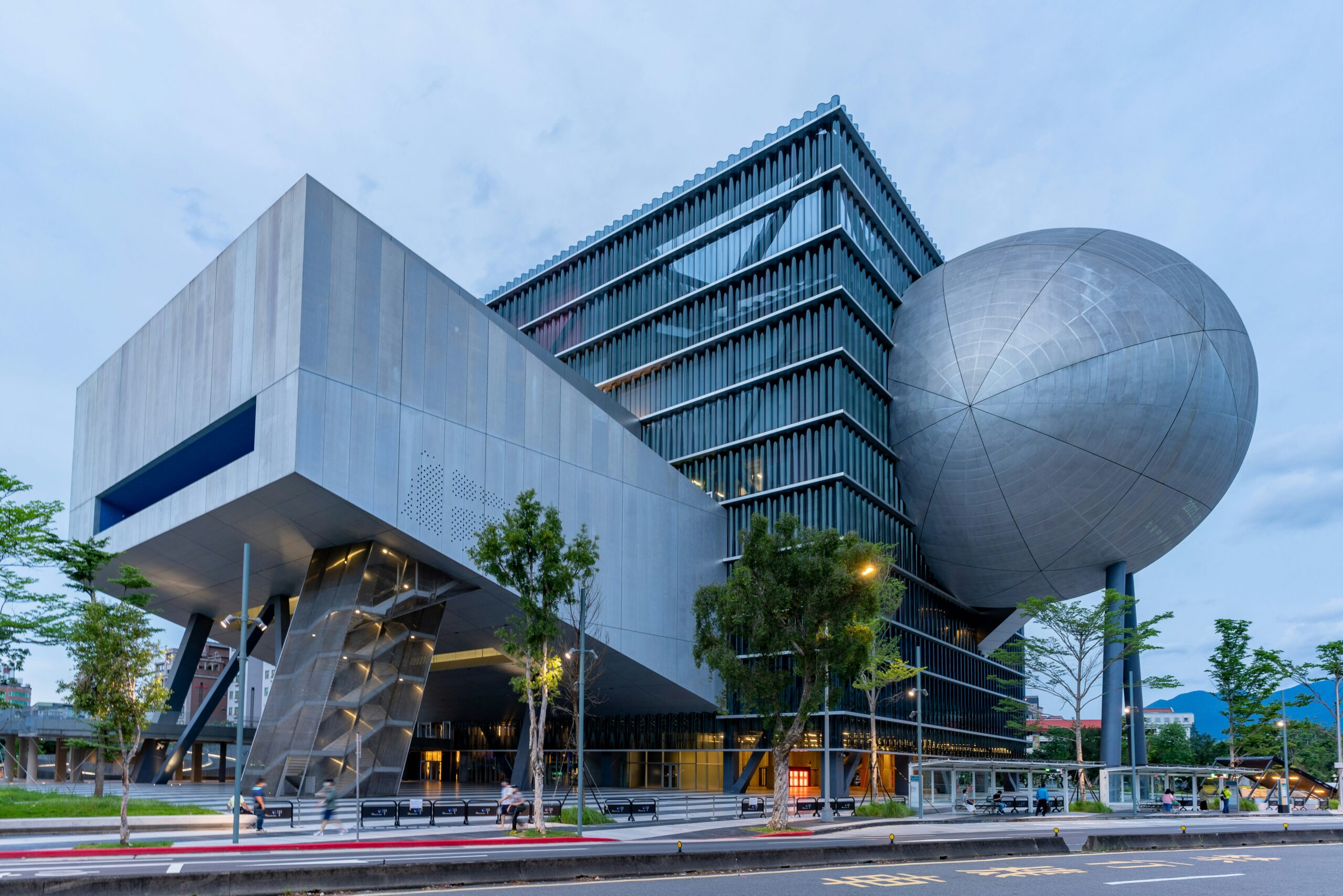
In November 2010, a bold architectural concept known as the Next Gene Architecture Museum drew international attention for its futuristic vision of culture, landscape, and urban life in Taipei. Designed by Zaha Hadid Architects, the project proposed a museum that would redefine how architecture interacts with terrain, movement, and public space.
Planned for the Au-Di area of Taipei County, now part of New Taipei City, the museum was conceived as an extension of the surrounding hillside rather than a standalone structure. The design featured sweeping, fluid forms that appeared to rise organically from the ground, creating a continuous relationship between the building and the landscape. Visitors would move through interconnected galleries, ramps, and open spaces that encouraged exploration rather than linear circulation.
The museum proposal was developed as part of the Next GENE 20 initiative, a collaborative architectural program that brought together international and Taiwanese architects to imagine the next generation of cultural and civic buildings. The initiative emphasized experimentation, digital design tools, and new spatial concepts, positioning architecture as a driver of cultural innovation.
According to project descriptions released in 2010, the museum’s form was shaped by both environmental and social considerations. The structure was designed to respond to natural light, topography, and pedestrian flow, while also serving as a public gathering space. Rather than acting solely as an exhibition venue, the museum was envisioned as an active urban landscape where art, architecture, and daily life intersected.
Although the Next Gene Architecture Museum was never constructed, it remains a significant conceptual work within contemporary architecture. The project reflected Zaha Hadid Architects’ broader exploration of parametric design and fluid geometry during that period, approaches that would later influence built projects around the world.
Architectural critics at the time noted that the proposal captured Taipei’s ambition to position itself as a forward-looking cultural capital in East Asia. Even as an unbuilt project, the museum continues to be referenced in academic studies and exhibitions as an example of how speculative architecture can challenge conventional ideas about museums and cities.
More than a decade later, the Next Gene Architecture Museum stands as a reminder of architecture’s ability to imagine alternative futures, using design not only to house culture but to actively shape how people experience it.