

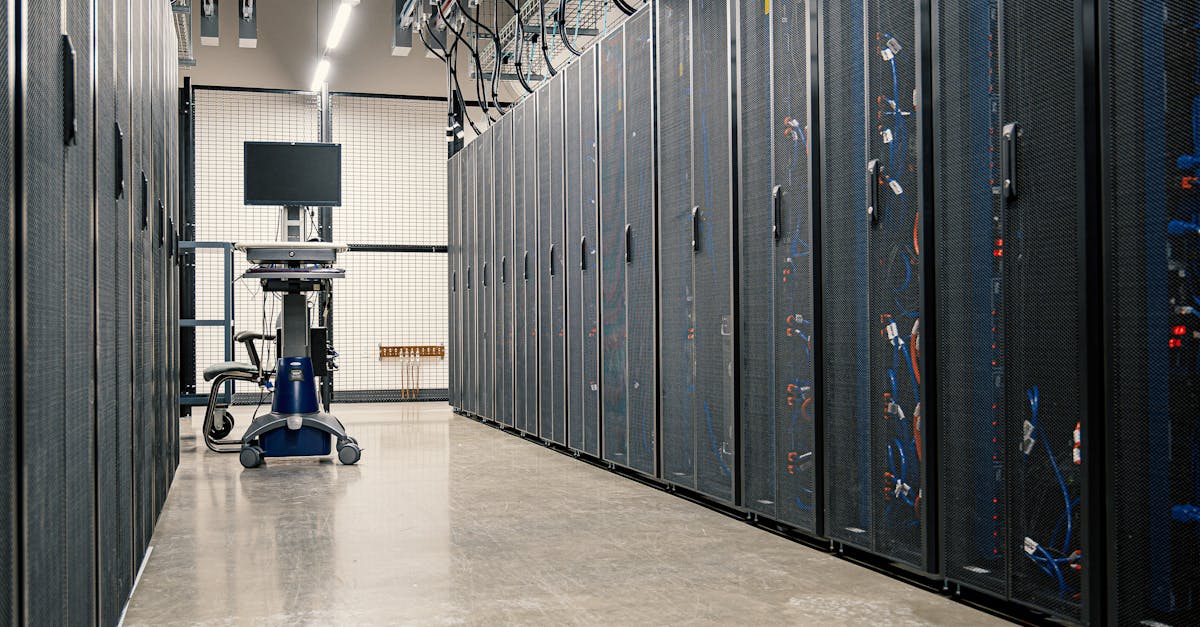
Data center cooling has become one of the most pressing challenges facing the technology industry as artificial intelligence workloads continue to expand at breakneck speed. The problem is straightforward: the chips powering AI systems generate enormous amounts of heat, and keeping them cool requires vast quantities of electricity and water. For cities and power companies already stretched thin, the consequences are becoming impossible to ignore.
The scale of the challenge is staggering. A single mid-sized data center can use more than 35,000 gallons of water per day just for cooling. Larger facilities pass cold liquid through tubes near the chips to absorb heat, then send that hot liquid to cooling yards where sprawling networks of pipes consume as much water as an entire city of 50,000 people. Meanwhile, cooling systems account for up to 40 percent of a data center's total power consumption. A 50 megawatt facility uses enough electricity to power a mid-sized city on its own.
The numbers are only getting worse. Nearly 100 gigawatts of new data center capacity will be added by 2030. U.S. data centers will consume about 8 percent of all electricity in the country by that same year. Global data center electricity demand could nearly double by 2030 to roughly 945 to 980 terawatt-hours per year. The cooling systems alone are projected to use up to 33 billion gallons of water annually by 2028.
Background
The explosion in AI computing has fundamentally changed what data centers look like and how much power they need. Traditional data centers used fans and air conditioning to blow cold air on chips. As facilities grew larger and chips became denser, companies shifted to liquid cooling systems. But even these advanced systems struggle with the heat intensity of modern AI workloads.
AI chips can reach temperatures exceeding 200 degrees and need to stay below 150 degrees to function properly. When they overheat, they slow down or shut off entirely, crippling the systems that depend on them. This problem has become so severe that energy constraints have become the biggest barrier preventing new data center construction. Communities across the United States have begun protesting data center projects, fearing that the power and water demands could strain local infrastructure and drive up costs for residents.
The data center cooling market reflects this urgency. The industry is projected to grow from about 11 billion dollars in 2025 to nearly 25 billion dollars by 2032. Big tech companies and venture capital investors are pouring billions into replacing outdated cooling technologies with more efficient solutions.
Key Details
New Cooling Technologies Emerge
One Los Angeles startup called Karman Industries has developed a system that uses liquid carbon dioxide as a refrigerant, circulated using technology adapted from rocket engines. The system spins at 30,000 revolutions per minute, nearly 10 times faster than traditional compressors. The company claims its pumps can reduce the space required for data center cooling equipment by 80 percent and use less than half the energy of conventional systems depending on conditions.
"Our high-level thesis is we could build the best compressor out there using the latest and greatest technology. We want to reduce that electrical consumption of cooling so that you have the most efficient way to cool these chips." – David Tearse, Chief Executive of Karman Industries
Karman's system does not require water for cooling, which opens possibilities for data centers in regions where water is scarce. In hot places like Texas and Arizona, where traditional cooling systems either consume excessive water or force companies to reduce chip performance, this waterless approach could be transformative. The company recently raised 20 million dollars and plans to begin customer deliveries in summer 2026 from its Los Angeles manufacturing facility.
Microsoft has announced a new data center design that uses zero water for cooling and has pledged to ensure its data centers do not increase electricity costs or deny water to nearby communities. Other companies are exploring even more unconventional approaches, with tech giants and startups investigating space-based data centers that could use solar power and natural cooling from the vacuum of space.
Shifting Industry Focus
The industry is undergoing a fundamental shift in how it measures success. Power density in data centers is increasing from 162 kilowatts per square foot to 176 kilowatts per square foot by 2027. AI-optimized servers will account for 64 percent of new power needs for data centers by 2030, up from 21 percent in 2025.
Data center operators are transforming from passive energy consumers into active grid stakeholders. They are co-investing in infrastructure upgrades, enabling load flexibility, and deploying on-site power generation and storage to improve reliability and manage costs. The new metric driving decisions in the industry is "tokens per watt per dollar" – not just using less energy, but using energy as efficiently as possible to maximize output.
What This Means
The cooling crisis is forcing cities and utilities to rethink their infrastructure planning. San Jose and its power provider are preparing massive grid upgrades as AI demand could nearly triple the city's energy use. Across the country, communities face difficult choices about whether to welcome data centers that bring jobs and tax revenue but strain local resources.
For the technology industry, the pressure to solve the cooling problem is creating opportunities for innovation and investment. Companies that develop efficient cooling solutions could capture significant market share from established players like Trane Technologies and Schneider Electric. The race is on to build systems that can handle the heat of artificial intelligence without exhausting the planet's water supplies or overwhelming the electrical grid.
The stakes are high. Without breakthrough cooling technologies and better energy management, the AI revolution could grind to a halt not because of computing limitations, but because cities simply cannot provide the water and electricity these systems demand.