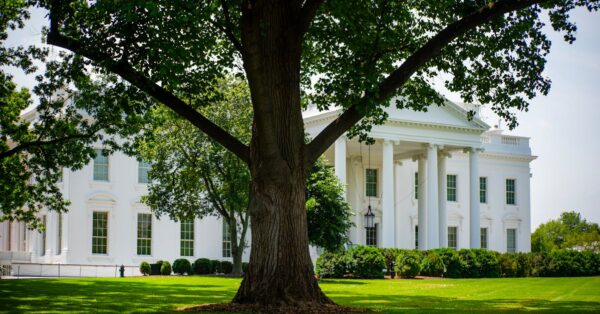


Top officials from Denmark and Greenland sat down with U.S. Vice President JD Vance and Secretary of State Marco Rubio on Wednesday at the White House to address President Trump's repeated threats to take control of the semiautonomous island. The meeting marked the first time the three governments discussed the issue at such a high level, but it produced no breakthrough. Instead, both sides acknowledged a fundamental disagreement that remains unresolved, even as Denmark announced plans to significantly increase its military presence in the Arctic territory.
Background
Trump's interest in acquiring Greenland is not new, but his rhetoric has intensified dramatically in recent weeks. He has repeatedly stated that the United States needs the island for national security reasons, arguing that without American control, China or Russia could move in. The president has warned that Denmark has not done enough to protect Greenland and that accepting anything less than full U.S. acquisition would be unacceptable.
Greenland is a semiautonomous territory within the Kingdom of Denmark. While the island has significant self-governance, Denmark retains responsibility for defense and foreign policy. The United States already maintains a military presence there under a 1951 defense agreement that allows Washington to establish and expand bases with Danish and Greenlandic consent.
Trump's threats escalated after the U.S. military operation in Venezuela that resulted in the capture of Venezuelan President Nicolás Maduro. The president has said his administration will acquire Greenland "one way or another," and warned that if diplomacy fails, "we're going to do it the hard way."
Key Details
During Wednesday's meeting, Denmark's Foreign Minister Lars Løkke Rasmussen made the country's position crystal clear. He stated that ideas violating Denmark's territorial integrity or Greenland's right to self-determination are "totally unacceptable." Despite describing the talks as "frank but also constructive," Rasmussen acknowledged the two sides have reached an impasse.
"For us, ideas that would not respect territorial integrity of the Kingdom of Denmark and the right of self-determination of the Greenlandic people are, of course, totally unacceptable. We, therefore, still have a fundamental disagreement, but we also agree to disagree."
Greenland's Foreign Minister Vivian Motzfeldt reinforced this message, saying her government wants to strengthen ties with the United States on security matters but made one thing clear: "That doesn't mean that we want to be owned by the United States."
Trump had posted on social media hours before the meeting that acquiring Greenland was essential for NATO's effectiveness. He argued that the alliance would become "far more formidable and effective" with the island under U.S. control. The president also mentioned plans to build a Golden Dome missile defense system there.
Greenland's Prime Minister Jens-Frederik Nielsen had already made his position known the day before the White House meeting. When asked if Greenland would choose between the United States and Denmark, Nielsen said: "We choose Denmark. We choose NATO. We choose the Kingdom of Denmark. We choose the EU." Trump responded dismissively, saying he disagreed and that Nielsen's stance would be "a big problem for him."
Military Buildup in the Arctic
Denmark announced it would significantly increase military activity in and around Greenland, committing additional funds for ships, drones, and fighter jets. This move reflects growing concern about the unpredictable security environment created by Trump's rhetoric.
NATO allies have also stepped up their presence. Sweden confirmed that military officers arrived in Greenland to prepare for Operation Arctic Endurance, a Danish military exercise. Norway said it would send two military personnel to explore further cooperation. Germany's Defense Ministry dispatched a reconnaissance team of 13 military personnel to assess possible contributions to regional security, including maritime surveillance.
Path Forward
Despite the sharp disagreement, both sides agreed to establish a high-level working group that will meet within weeks to explore whether Trump's security concerns can be addressed without crossing what Denmark calls its "red lines." Rasmussen said the group should focus on addressing American security concerns while respecting Denmark's fundamental position on sovereignty.
Rasmussen also pointed out that the United States already has substantial military access to Greenland under the existing 1951 agreement. He invited the Trump administration to specify any additional security requests, saying Denmark would examine them constructively.
What This Means
The meeting represents a critical moment in transatlantic relations. Trump's threats have alarmed European leaders, who worry that such actions could destabilize NATO and undermine the alliance's unity at a time when security concerns are rising.
While the working group offers a diplomatic off-ramp, the fundamental positions remain far apart. Denmark and Greenland have made clear they will not negotiate over sovereignty, while Trump has indicated that anything short of acquisition is unacceptable. The question now is whether the working group can find common ground on security arrangements that satisfy American concerns without compromising Greenlandic and Danish autonomy.
The military buildup by Denmark and NATO allies signals that Europe is taking Trump's threats seriously and preparing to strengthen its own position in the Arctic. This could lead to increased military activity in the region and further strain U.S.-European relations if tensions continue to escalate.