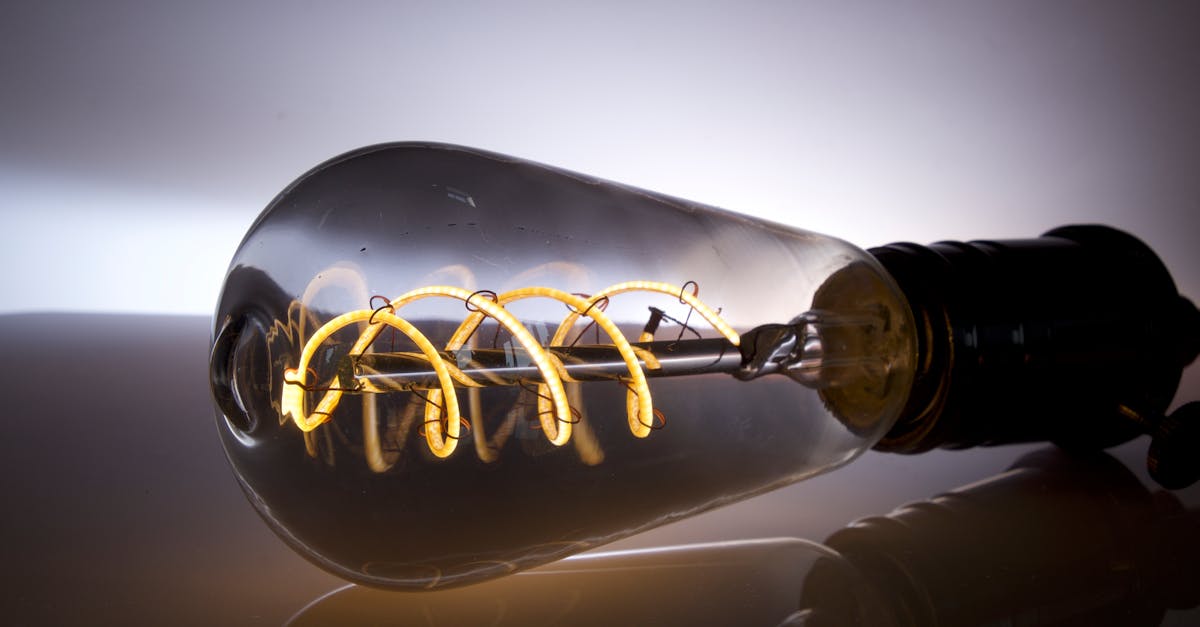
Thomas Edison worked in his Menlo Park lab in New Jersey in 1879 to create a practical electric light bulb. He used carbon filaments that heated up fast when electricity passed through them. New tests show those filaments likely turned into graphene, a single layer of carbon atoms, more than a century before scientists knew it existed.
Background
Edison set up one of the first industrial labs in Menlo Park. He tested thousands of materials for light bulb filaments. After months of work, he settled on carbonized bamboo from Japan. These filaments glowed bright when voltage hit them, reaching temperatures over 2,000 degrees Celsius. That heat made light, but it also changed the carbon in ways Edison did not understand at the time.
Graphene stayed unknown until 2004. Two scientists peeled it from graphite with tape and won a Nobel Prize in 2010. It is strong, thin, and conducts electricity well. Today, it shows up in batteries, sensors, and screens. No one thought Edison's old bulbs could connect to it.
Researchers at Rice University in Houston took a fresh look. They read Edison's 1879 patent for exact details on filament size and setup. The patent described bamboo threads just 50 micrometers thick. It also noted the voltage and how long the bulbs burned.
Key Details
The Rice team built replicas of Edison's bulbs. They bought handmade ones from a New York art shop. These matched the originals, with Japanese bamboo filaments almost the same width. The team hooked them to a 110-volt DC power source, just like Edison did.
They turned the power on for 20 seconds. That short burst hit the high heat needed. The filament color shifted from dark gray to shiny silver. Under a microscope, it looked different.
To check what happened, they used Raman spectroscopy. This method shines lasers on a material and reads the light bounce-back like a fingerprint. The results pointed to turbostratic graphene. That is a type where carbon layers sit at odd angles, not stacked neat.
How the Process Worked
The key was flash Joule heating. Electricity flows through the carbon, meets resistance, and heats it fast. At 2,000 to 3,000 degrees Celsius, the carbon atoms rearrange into graphene sheets. Edison did this every time he lit a bulb. His 13-hour test burns might have turned it to graphite later, but the first moments made graphene.
The team leader, Lucas Eddy, started with other ideas like arc welders. Then he remembered old bulbs. He tested fakes first, but spotted tungsten inside. The real replicas worked.
"To reproduce what Thomas Edison did, with the tools and knowledge we have now, is very exciting," said James Tour, a chemistry professor at Rice and lead on the study. "Finding that he could have produced graphene inspires curiosity about what other information lies buried in historical experiments."
Eddy noted the filaments were only 5 micrometers wider than Edison's. That small difference did not change the outcome. The graphene formed in spots along the filament.
What This Means
This work ties 19th-century invention to 21st-century tech. Graphene production now needs special gear. Edison's method used cheap carbon and basic electricity. It could inspire simple ways to make the material at scale.
Turbostratic graphene fits some uses better than perfect sheets. It conducts well and stays stable. Factories might adapt old bulb ideas for mass output.
The find raises questions about history. What else did early inventors make by accident? Labs used heat and electricity before, like in arc lamps. Revisiting them could unlock new paths.
No one can test Edison's exact bulbs. They burned long and turned to graphite. But the replicas match patents and records. The evidence holds up under modern checks.
James Tour asks what old experiments hide. He wonders what questions past scientists would pose today. This graphene link shows history and science overlap in unexpected ways.
The study appeared in ACS Nano this month. It details the tests, graphs, and spectra. Rice's lab keeps pushing flash heating for carbon goods.