Scientists at the Max Planck Institute of Quantum Optics in Germany have completed the most precise measurement of a proton's size to date, marking a major milestone in physics research. The team, led by Lothar Maisenbacher, measured the proton's charge radius at 0.840615 femtometers—about 2.5 times more accurate than any previous measurement from hydrogen experiments. The findings, published in the journal Nature, resolve a puzzle that has frustrated physicists for over a decade and provide strong evidence that our best understanding of how the universe works remains correct.
Background
For decades, physicists have used the hydrogen atom as a testing ground for quantum electrodynamics, or QED—the theory that explains how light and charged particles interact. Hydrogen is the simplest atom in nature, containing just one proton and one electron, which makes it ideal for checking whether QED's mathematical predictions match reality. Scientists have repeatedly confirmed these predictions with remarkable accuracy, but they have also searched for tiny deviations that might hint at undiscovered physics beyond our current understanding.
Measuring the proton's size became central to this effort because the proton's radius affects the exact positions of the energy levels that electrons can occupy in a hydrogen atom. When electrons jump between these levels, they absorb or emit light at very specific frequencies. By measuring these frequencies with extreme precision, scientists can work backwards to determine how large the proton actually is.
For years, however, different experimental techniques produced conflicting measurements. In 2010, researchers at the Paul Scherrer Institute in Switzerland published a result showing the proton was smaller than previous estimates suggested. This triggered what became known as the "proton radius puzzle"—a gap between measurements made using different methods that left physicists uncertain about which answer was correct.
Key Details
The Measurement Technique
The German team took an unusual approach to resolve the dispute. Rather than measuring the most commonly studied energy transition in hydrogen, they examined a transition that had never been explored at this level of precision: from the 2S excited state to the 6P state. The 2S state is particularly useful because it is unusually stable, providing a steady platform for extremely precise measurements.
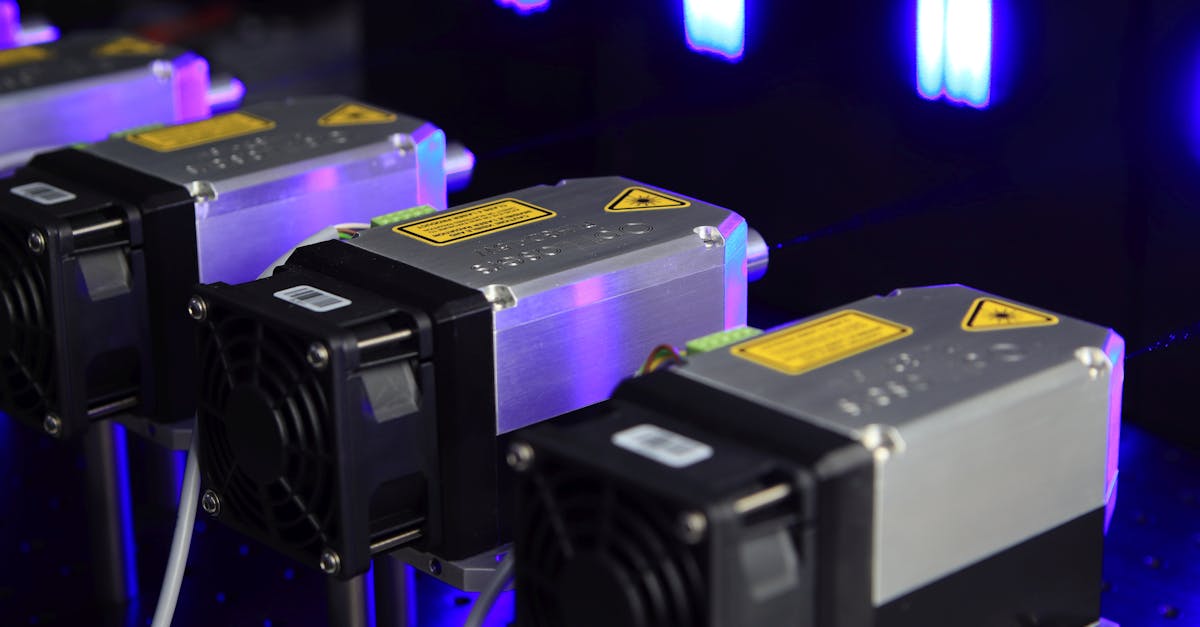
Using high-precision laser spectroscopy, the researchers measured the frequency of the light emitted during this transition. Their result was extraordinarily precise: 730,690,248,610.7948 kilohertz, matching the Standard Model's prediction to within just 0.0025 kilohertz. To put this in perspective, the measurement was accurate to more than twelve decimal places.
"The measurement provides a precise value for the proton radius, resolving the long-debated 'proton radius puzzle'." – Max Planck Institute of Quantum Optics
From this frequency measurement, the team extracted their value for the proton's charge radius. Crucially, their result agreed with the smaller radius found in earlier hydrogen experiments, helping to settle the long-standing disagreement between different measurement methods.
Why This Matters for Physics
The new measurement represents one of the most stringent tests ever conducted of quantum electrodynamics in bound atomic systems. When a theory continues to withstand increasingly precise tests, it gains credibility. Conversely, the room for alternative theories shrinks. If physics beyond the Standard Model exists—something many physicists believe is likely—it must now hide within even narrower margins than before.
What This Means
The resolution of the proton radius puzzle removes a significant obstacle that had prevented physicists from testing QED to its ultimate limits. For over a decade, the conflicting measurements had created uncertainty about which experimental technique was reliable. Now that the discrepancy has been resolved, physicists can move forward with greater confidence.
The findings also confirm that the proton does not mysteriously change size depending on the context in which it is measured. The earlier measurements using electronic hydrogen—ordinary hydrogen with an electron—were apparently less accurate than researchers had believed. The new result aligns with measurements from muonic hydrogen, a form of hydrogen in which the electron is replaced by a heavier particle called a muon, suggesting both techniques now point to the same answer.
For the broader physics community, this work demonstrates the power of precision measurement as a tool for discovery. Modern science increasingly relies on instruments that can measure quantities to extraordinary accuracy. The German team's achievement shows how such precision can help settle fundamental questions and test our most important theories. As the Standard Model continues to withstand such exacting scrutiny, the search for physics beyond it becomes both more challenging and potentially more rewarding—any new discoveries would have to explain phenomena that the current theory cannot.