

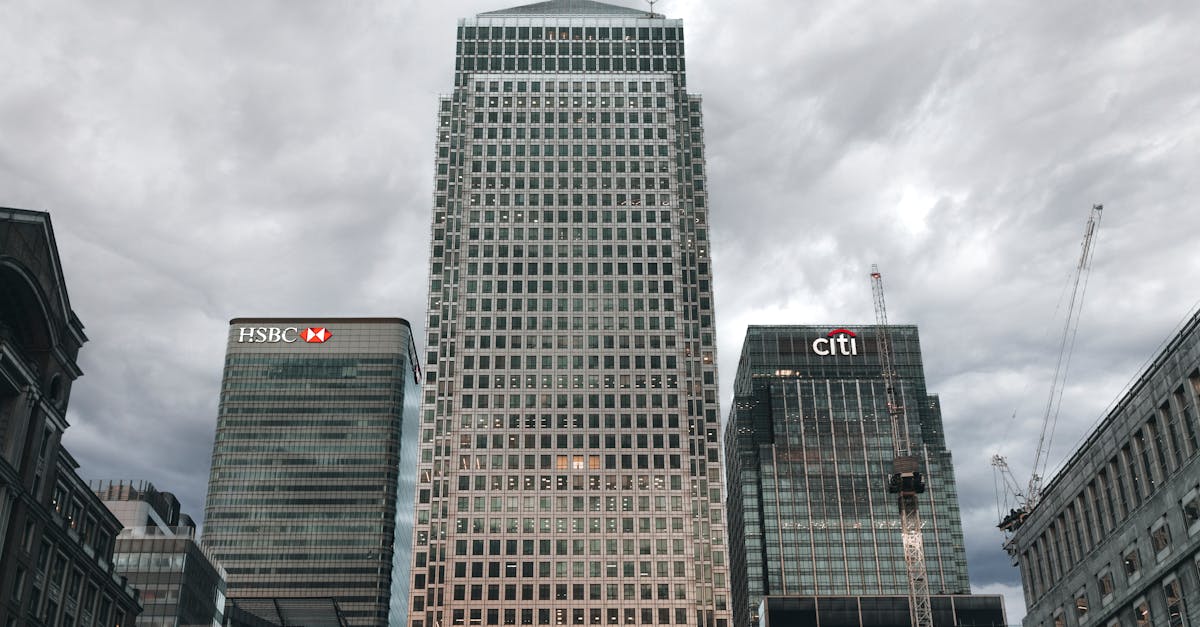
HSBC Holdings reported a $29.9 billion annual profit for 2025, down 7% from the previous year, but the bank's results reveal a more complex picture than the headline numbers suggest. The decline was driven largely by one-time charges tied to the bank's ongoing restructuring, including losses from selling business units and impairment charges. Strip away these exceptional items, and the bank actually delivered stronger underlying performance, signaling that HSBC's strategy is gaining traction despite the headwinds it faces.
Key Takeaways
- HSBC's reported profit fell 7% to $29.9 billion, but underlying profit excluding one-time items rose 7% to $36.6 billion
- Revenue climbed 4% to $68.3 billion, driven by wealth management and transaction banking growth
- The bank increased its dividend by 14% and saw its share price jump nearly 50%, delivering total shareholder returns of more than 57%
- Operating expenses rose 10%, partly due to $3 billion in one-time costs but also reflecting planned investments in growth
Background
HSBC is in the middle of a major overhaul. The London-based bank, which operates across multiple continents with a strong presence in Asia, has been trimming operations and reshaping itself into a more focused business. This restructuring has meant selling off units, closing some operations, and taking charges as it exits certain markets.
In 2025, that process accelerated. The bank took a $2.1 billion hit from losses related to its stake in Bank of Communications, a Chinese lender. It also booked a $1.5 billion loss from selling its French home loan portfolio and took $1.4 billion in legal provisions. Add in another $1 billion for restructuring costs, and you get a sense of why reported profit fell despite the bank's underlying business performing better.
The wider economic context matters too. Interest rates remain elevated compared to the pandemic era, which helps banks earn more on their lending. But credit losses are rising as some borrowers struggle with higher debt servicing costs. HSBC has had to set aside more money for potential bad loans.
Key Details
Revenue and Earnings Power
Revenue rose to $68.3 billion from $65.9 billion the year before. The growth came from multiple sources. Wealth management brought in more fees as investment activity picked up. Transaction banking, particularly foreign exchange trading, was strong. Net interest income—the money banks make from the gap between what they pay depositors and what they charge borrowers—climbed $2.1 billion to $34.8 billion, helped by reinvesting hedges at higher yields and growing customer deposits.
When you exclude one-time items, revenue actually grew 5% to $71 billion, showing the underlying business is expanding.
Profit before tax, excluding notable items, jumped 7% to $36.6 billion. This is the number that matters most to investors trying to understand whether the bank's core operations are improving. And they are. The wealth business performed particularly well in Hong Kong and through the bank's international wealth and premier banking division. Corporate and institutional banking also delivered solid results.
Customer Growth and Lending
HSBC added $131.9 billion in customer deposits, though much of that came from favorable currency movements. On a constant currency basis—which strips out the impact of the dollar's strength—deposits rose $67.6 billion. That's significant. More deposits mean more money the bank can lend out and invest, and it's a sign customers trust the bank with their cash.
Lending balances grew too, up $57.7 billion on a reported basis and $17.6 billion on a constant currency basis. The UK business saw particular strength in mortgages and commercial lending.
The Cost Challenge
Operating expenses jumped 10% to $36.4 billion. That sounds alarming until you dig into the details. About $3 billion of that increase came from the one-time items—legal bills, restructuring costs, and expenses tied to selling off businesses. The remaining increase reflected inflation and deliberate investments in technology and people.
The bank says it's managing "target basis" cost growth at around 3%, which means it's keeping a lid on expenses when you exclude the one-time hits. That's important because it shows the bank isn't letting costs spiral out of control even as it invests for growth.
Capital Strength
The bank's return on tangible equity—a key measure of how efficiently it deploys shareholder money—was 13.3% on a reported basis and 17.2% excluding notable items. The latter figure is what analysts focus on, and at 17.2%, it shows the bank is generating solid returns. The bank also maintained a capital ratio of 14.9%, reflecting what management describes as "long-standing financial strength."
What This Means
HSBC's results paint a picture of a bank in transition. The headline profit decline reflects the pain of restructuring—selling businesses, taking write-downs, and paying legal bills. But underneath, the bank's core operations are firing on multiple cylinders. Revenue is growing, deposits are flowing in, and the wealth business is thriving.
The bank's confidence shows in its dividend decision. HSBC increased its total ordinary dividend per share by 14% to $0.75, or $12.9 billion total. That's a significant payout, and companies don't typically boost dividends unless they're confident about future earnings power.
The share price performance backs that up. HSBC's stock jumped nearly 50% over the year, and when you combine that with the dividend, shareholders enjoyed total returns of more than 57%. That suggests investors believe the restructuring pain is temporary and that the bank will emerge leaner and more profitable.
"We delivered a strong performance in 2025, driven by decisive action and swift execution," the bank said in its results announcement, highlighting confidence in the strategy.
But there are risks. Rising credit losses suggest some borrowers are struggling. Operating expenses are climbing even as the bank manages cost growth. And the bank's exposure to Asia—particularly Hong Kong—comes with geopolitical uncertainty.
For now, though, HSBC appears to be executing its plan. The restructuring is painful, but the underlying business is growing, and that's what ultimately matters for long-term shareholder value.
Frequently Asked Questions
Why did HSBC's profit fall if the underlying business is doing well?
HSBC took several one-time charges in 2025 that reduced reported profit by $4.9 billion. These included $2.1 billion in losses related to the bank's stake in a Chinese lender, $1.5 billion from selling a French loan portfolio, $1.4 billion in legal provisions, and $1 billion in restructuring costs. These are largely one-off items tied to the bank's ongoing overhaul, not signs of weakness in the core business.
What does the dividend increase tell us about HSBC's confidence?
When a bank raises its dividend by 14% in the middle of restructuring, it's signaling confidence that the painful changes will pay off. Companies only boost shareholder payouts when management believes earnings will support higher distributions going forward. HSBC's dividend hike suggests leadership expects the underlying business to keep improving.
Is HSBC's exposure to Asia a risk or an opportunity?
Both. Asia, particularly Hong Kong, is HSBC's largest market and a major growth driver. The wealth business there is booming. But Asia also comes with geopolitical risks, including tensions between the US and China. The bank's heavy Asia exposure means it could be affected by trade disputes or other political developments in the region.
Frequently Asked Questions
Why did HSBC’s profit fall if the underlying business is doing well?
HSBC took several one-time charges in 2025 that reduced reported profit by $4.9 billion. These included $2.1 billion in losses related to the bank’s stake in a Chinese lender, $1.5 billion from selling a French loan portfolio, $1.4 billion in legal provisions, and $1 billion in restructuring costs. These are largely one-off items tied to the bank’s ongoing overhaul, not signs of weakness in the core business.
What does the dividend increase tell us about HSBC’s confidence?
When a bank raises its dividend by 14% in the middle of restructuring, it’s signaling confidence that the painful changes will pay off. Companies only boost shareholder payouts when management believes earnings will support higher distributions going forward. HSBC’s dividend hike suggests leadership expects the underlying business to keep improving.
Is HSBC’s exposure to Asia a risk or an opportunity?
Both. Asia, particularly Hong Kong, is HSBC’s largest market and a major growth driver. The wealth business there is booming. But Asia also comes with geopolitical risks, including tensions between the US and China. The bank’s heavy Asia exposure means it could be affected by trade disputes or other political developments in the region.