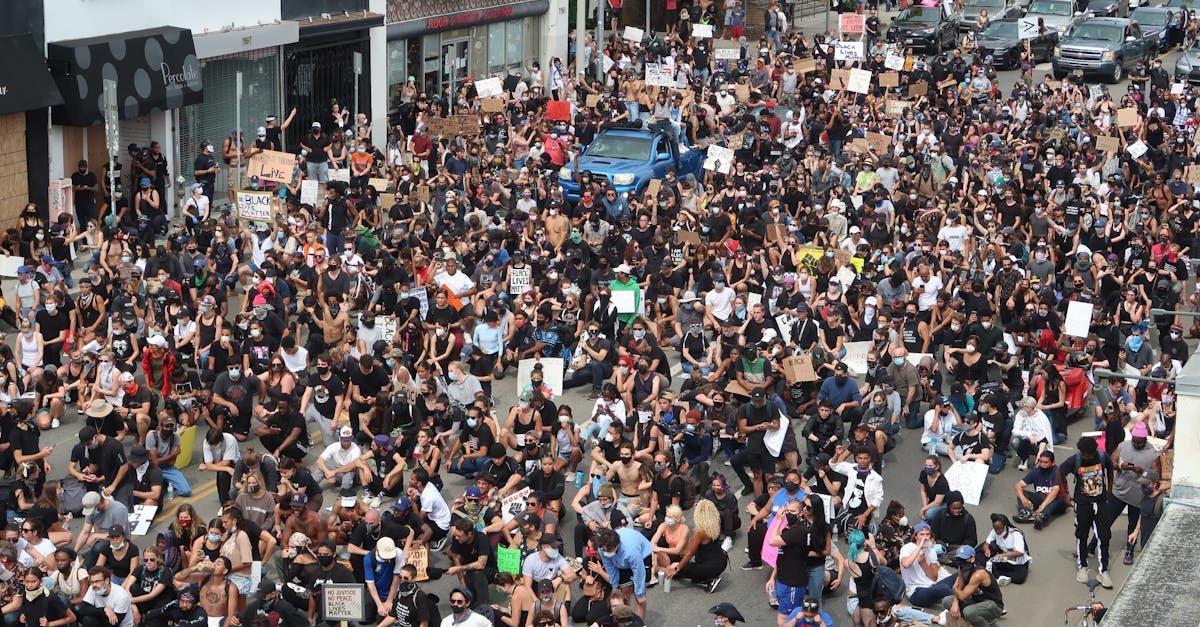
Thousands of Iranian-Americans gathered in downtown Los Angeles on Sunday to march against the Iranian government's deadly crackdown on protesters back home. The demonstrations in California reflect growing alarm within the diaspora community over the scale of violence unfolding in Iran, where authorities have killed thousands during weeks of anti-government unrest that began in late December.
The Los Angeles march was one of several protests across California showing solidarity with Iranians challenging their government. Demonstrators in Westwood, the epicenter of Southern California's Iranian community, and in other parts of the state have taken to the streets as news of the violence spreads. The turnout reflects the deep concern many Iranian-Americans feel for family members still in Iran and their hopes for political change.
Background
The protests in Iran started on December 28 after the country's currency, the rial, collapsed, triggering an economic crisis. What began as demonstrations over financial hardship quickly transformed into a broader challenge to the 86-year-old Supreme Leader Ayatollah Ali Khamenei's rule. The unrest has spread to all 31 provinces across Iran, with protesters demanding fundamental changes to the government.
The Iranian government has responded with force. A U.S.-based activist group, the Human Rights Activists News Agency, reported on Sunday that it has verified at least 3,766 deaths during the crackdown. The agency said it fears the actual death toll could be significantly higher. This represents the deadliest period of unrest in Iran in decades, exceeding any other round of protests or civil unrest the country has experienced since the 1979 Islamic Revolution.
Iranian officials have not released an official death toll, though Supreme Leader Khamenei acknowledged on Saturday that the protests had left "several thousand" people dead. The government has also arrested 24,348 protesters during the crackdown, according to the Human Rights Activists News Agency.
Key Details
The Diaspora's Response
Iranian-Americans have watched the events unfold with mounting dread. Many have been unable to contact family members in Iran since authorities imposed a near-total internet blackout starting January 8. Phone lines have also failed in many places, leaving diaspora members in the dark about loved ones' safety.
"Before the regime completely blacked out the internet, and in many places, electricity, there was an electrifying sense of hope. But now, as the death toll rises, that hope has been devastatingly tempered with a sense of visceral dread." – Refael, a prominent voice in Los Angeles' Persian Jewish community
For many in the Iranian-American community, the current crisis carries deep personal meaning. Some have family ties to previous waves of unrest in Iran. Others fled the country themselves after facing persecution for their opposition to the government. The current protests have reignited hopes for change while simultaneously raising fears for those still living under the regime's control.
A Troubling Incident
The California solidarity movement took a disturbing turn on Sunday when a man drove a U-Haul truck into a crowd of marchers in Westwood. The vehicle bore a sign reading "No Shah. No Regime. USA: Don't Repeat 1953. No Mullah," apparently referencing the U.S.-backed 1953 coup that toppled Iran's prime minister and set the stage for decades of tension. Police arrested the driver, identified as Calor Madanescht, 48, on suspicion of reckless driving. He was released Monday afternoon. The FBI said it was investigating the incident, though the Los Angeles Police Chief said there was no apparent connection to terrorism. The incident caused no serious injuries but heightened tensions within the community.
International Pressure
President Trump has taken a vocal stance on the Iranian protests, signaling support for the demonstrators. He has repeatedly threatened military action if Iran continues killing protesters or executes detained activists. Trump announced that countries doing business with Iran would face 25 percent tariffs from the United States, effective immediately.
Trump claimed that Iranian officials had "canceled the hanging of over 800 people" and said he "greatly respect[s] the fact that they canceled," though neither the Trump administration nor the Iranian government provided details of such planned executions. Trump called Khamenei "a sick man" who should "stop killing people."
The Iranian government has blamed the United States for the unrest, with Khamenei calling Trump a "criminal" for supporting the rallies. President Masoud Pezeshkian blamed "longstanding enmity and inhumane sanctions" imposed by the U.S. and its allies for any hardships facing Iranians.
What This Means
The marches in Los Angeles and across California underscore how the Iranian crisis has become a cause that unites the diaspora community. Despite the diversity within Iranian-American communities, the current crackdown has galvanized people across different backgrounds and beliefs to speak out.
For those in Iran, the internet blackout has made the situation even more dire. While limited internet services briefly returned on Saturday, access remains severely restricted. Google began working again on Sunday, but only for domestic websites, and email services remain blocked. This information vacuum has made it harder for the outside world to verify what is happening on the ground.
The situation reflects broader tensions between the United States and Iran. The Trump administration's explicit support for the protesters and threats of military action have escalated rhetoric on both sides. Meanwhile, Iranian-Americans remain caught between hope for change in their homeland and fear for relatives still living there. The streets of Los Angeles have become a place where that tension plays out, with thousands expressing solidarity with those risking their lives in Iran's streets.