Rev. Jesse Jackson, one of the most prominent voices for civil rights and social justice in modern American history, has died at age 84. Jackson spent more than 60 years fighting for racial equality, economic opportunity, and voting rights, leaving an imprint on virtually every major movement for civil rights and political empowerment since the 1960s.
Jackson's death marks the end of an era for the civil rights movement. He was present at some of its most defining moments, from the 1963 March on Washington where Martin Luther King Jr. delivered his famous "I Have a Dream" speech, to the 1965 Selma to Montgomery marches in Alabama. He was also with King at the Lorraine Motel in Memphis, Tennessee, on April 4, 1968, when the civil rights leader was fatally shot.
Background
Jackson's journey into activism began as a student at North Carolina Agricultural & Technical College in 1963, where he led protests to desegregate theaters and restaurants in Greensboro. After witnessing the violence of "Bloody Sunday" in Selma in 1965, he traveled to Alabama and met King, who was impressed by Jackson's drive and organizational abilities. King brought him into the Southern Christian Leadership Conference and soon dispatched him to Chicago to establish Operation Breadbasket, a program designed to pressure major corporations to hire Black workers and support Black businesses.
By 1966, Jackson had become head of the Chicago chapter of Operation Breadbasket. He also helped establish the Chicago Freedom Movement, which fought for open housing and school desegregation. His success in organizing economic boycotts and negotiations with corporations demonstrated his talent as both an organizer and a persuasive speaker.
Three years after King's assassination in 1971, Jackson left the SCLC and founded Operation PUSH—People United to Save Humanity—in Chicago. The organization focused on economic empowerment and expanding educational, business, and employment opportunities for Black Americans and other disadvantaged communities. Through aggressive corporate campaigns, Operation PUSH forced major companies to adopt affirmative action policies and hire more Black workers.
In the mid-1980s, Jackson established the National Rainbow Coalition, a social justice organization aimed at bringing together diverse groups to advocate for human rights and political empowerment. In 1996, he merged the two organizations into Rainbow PUSH Coalition, which he led until 2023.
Key Details
Political Campaigns and National Profile
Jackson ran for president twice as a Democrat, first in 1984 and again in 1988. His 1984 campaign brought him national attention and established him as a major political figure. His 1988 run was even more successful—at one point he took the lead in both popular votes and delegates, finishing second in the race for the Democratic nomination. These campaigns marked the most successful presidential runs by a Black candidate before Barack Obama's victories two decades later.
Following his first campaign, Jackson used his political platform to address voting rights issues. In 2000, following the contested presidential election in Florida, Jackson joined members of the Florida Black Caucus in filing a civil rights lawsuit. The suit charged that minority voters in Duval County were being discarded at higher rates than white voters. Jackson noted that 27,000 votes from Duval County were not counted on election night, with most coming from Black inner-city neighborhoods.
International Diplomacy
Beyond his work in the United States, Jackson became known for his skills as a negotiator and his ability to influence world leaders. In 1984, he secured the release of Navy pilot Robert Goodman, who had been held captive in Lebanon after his plane was shot down. In 1991, he helped secure the release of more than 700 foreign women and children held in Kuwait following Iraq's invasion. In 1999, he won the freedom of three American prisoners of war held by Yugoslav President Slobodan Milosevic.
These diplomatic successes gave Jackson influence on the international stage and demonstrated his reach beyond American borders.
Recognition and Awards
In 1999, President Bill Clinton awarded Jackson the Presidential Medal of Freedom, the nation's highest civilian honor. The NAACP recognized his work with the President's Award in 1988 and the Spingarn Medal in 1989. In 2021, Jackson received France's highest order of merit, the Commander of the Legion of Honor. Over his lifetime, he received more than 40 honorary doctorate degrees.
"It's hard to imagine how we could have come as far as we have without the creative power, the keen intellect, the loving heart, and the relentless passion of Jesse Louis Jackson," Clinton said at the medal ceremony.
Later Years
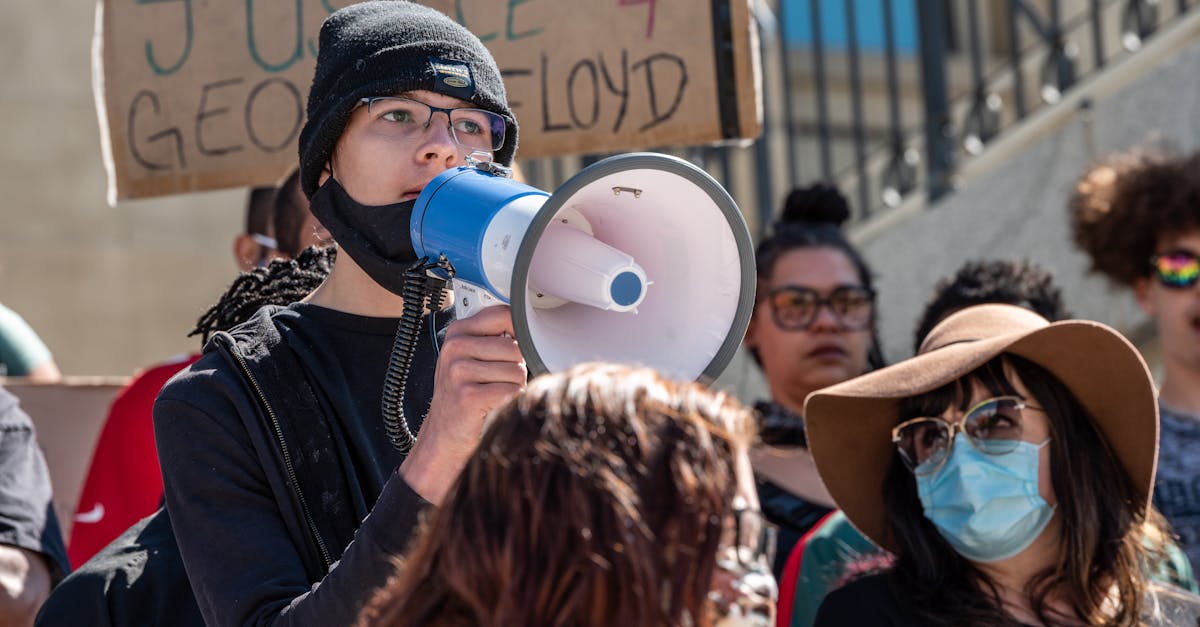
Despite serious health challenges in his final years, including a disorder that affected his ability to move and speak, Jackson remained active in the struggle for racial justice. In 2024, he appeared at the Democratic National Convention in Chicago and at a City Council meeting to support a resolution backing a ceasefire in the Israel-Hamas war. He also participated in protests following the killing of George Floyd, speaking to marchers in Minneapolis about the need to continue fighting for justice.
What This Means
Jackson's death represents the loss of a direct link to the civil rights movement of the 1960s and the passage of a generation of leaders who worked alongside King. His organizations—Operation PUSH and Rainbow PUSH Coalition—shaped corporate America's approach to hiring and opportunity for Black workers. His presidential campaigns opened doors for Black candidates in national politics and demonstrated the power of grassroots organizing.
The causes Jackson championed throughout his life remain unfinished. Voting rights, economic opportunity, and racial equality continue to be contested in American politics. His legacy includes not just the specific victories he won—corporate hiring agreements, the release of prisoners, the expansion of the Rainbow Coalition—but also the model of sustained activism he demonstrated across six decades.
Jackson's influence extended beyond the United States. He helped establish Operation Black Vote in the United Kingdom to promote minority participation in British elections, showing his commitment to expanding democratic participation globally. In his final years, he remained vocal about reauthorizing the 1965 Voting Rights Act, a law he had helped protect through decades of advocacy.