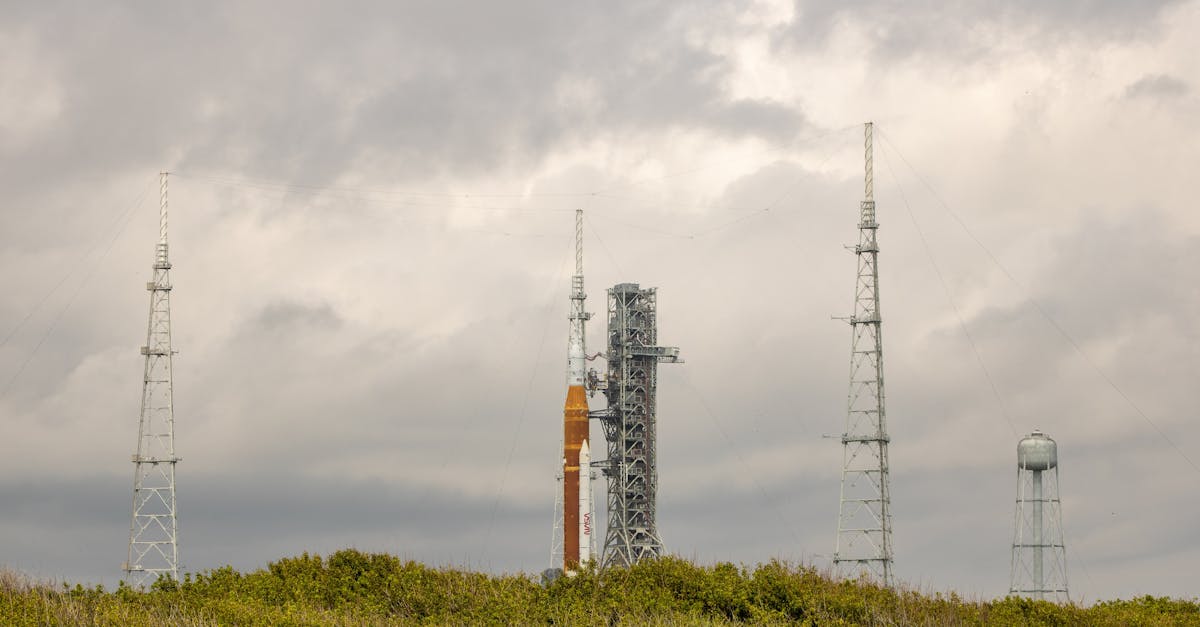
NASA is rolling out its Artemis II moon rocket to Launch Pad 39B at Kennedy Space Center on Saturday morning, beginning the final preparations for what will be humanity's first crewed mission to the moon in more than 50 years. The 322-foot-tall Space Launch System rocket and Orion spacecraft, stacked together on a mobile launch platform, will make the slow four-mile journey from the Vehicle Assembly Building starting at 7 a.m. EST.
The rollout marks a significant moment in the space program's effort to return astronauts to lunar orbit after five decades. Four crew members—NASA astronauts Reid Wiseman, Victor Glover, and Christina Koch, along with Canadian Space Agency astronaut Jeremy Hansen—are scheduled to fly the 10-day mission around the moon and back.
Background
The Artemis program represents NASA's long-term strategy to establish a sustainable human presence on and around the moon. Artemis II follows the uncrewed Artemis I test flight in November 2022, which validated the SLS rocket and Orion spacecraft systems without putting astronauts at risk.
The infrastructure being used for Artemis comes largely from the Apollo era. The Vehicle Assembly Building, Launch Pad 39, the Crawler-Transporter 2 vehicle, and the crawlerway itself were all built during the 1960s and 1970s for the Apollo program. The last time a human spacecraft rolled out to a launch pad for a lunar mission was August 28, 1972, when the Apollo 17 Saturn V rocket moved to Launch Complex 39A.
"This is not a rush," NASA officials said during briefings about the February launch timeline, acknowledging the tight schedule while emphasizing that safety remains the priority.
Key Details
The Rollout Process
The Crawler-Transporter 2, a massive vehicle originally built for the Apollo program, will carry the 11-million-pound stack at less than one mile per hour. The slow pace is intentional, designed to keep the rocket stable during the multi-hour journey. NASA estimates the trek will take between 8 and 12 hours to complete.
Once the rocket reaches Launch Pad 39B, NASA crews will connect it to the pad's infrastructure systems. This includes setting up all the equipment needed for fueling and launch operations.
The Path to Launch
The earliest possible launch date for Artemis II is February 6, 2026, but reaching that target depends on successful completion of several critical tests. Most importantly, NASA plans to conduct a "wet dress rehearsal" on February 2, where engineers will load the rocket with cryogenic propellants and run through a simulated launch countdown.
The February launch window extends from February 6 through February 10, with potential launch opportunities on each of those days. If the February window doesn't work out, NASA has backup opportunities in March and April, with launch windows available every month through at least April.
Why the Timeline Is Tight
The Artemis I mission experienced multiple delays due to fuel leaks and other technical issues, requiring three launch attempts before finally lifting off. NASA engineers believe they have fixed the problems that caused those delays, but they need to verify the fixes work before committing to a crewed launch.
Beyond the wet dress rehearsal, NASA must complete numerous systems checks on both the SLS rocket and Orion spacecraft, as well as final preparations with the astronaut crew. If problems emerge during any of these tests, engineers can roll the rocket back to the Vehicle Assembly Building for additional work.
What This Means
The rollout represents a turning point in the Artemis program. For the first time since the Apollo era, NASA has a crewed lunar mission ready to move toward the launch pad. The mission will test critical life support systems on the Orion spacecraft that will be needed for future longer-duration missions to the lunar surface and beyond.
The four astronauts aboard Artemis II will fly farther from Earth than any human has traveled in the past 50 years. Their mission serves multiple purposes: scientific discovery, economic benefits through technology development, and establishing the foundation for sustained human exploration of the moon.
The tight timeline reflects both NASA's eagerness to resume crewed lunar missions and the genuine complexity of preparing a rocket for human spaceflight. Every system must work perfectly, and every test must be completed successfully. The journey from the Vehicle Assembly Building to Launch Pad 39B on Saturday is just the beginning of that final countdown.