

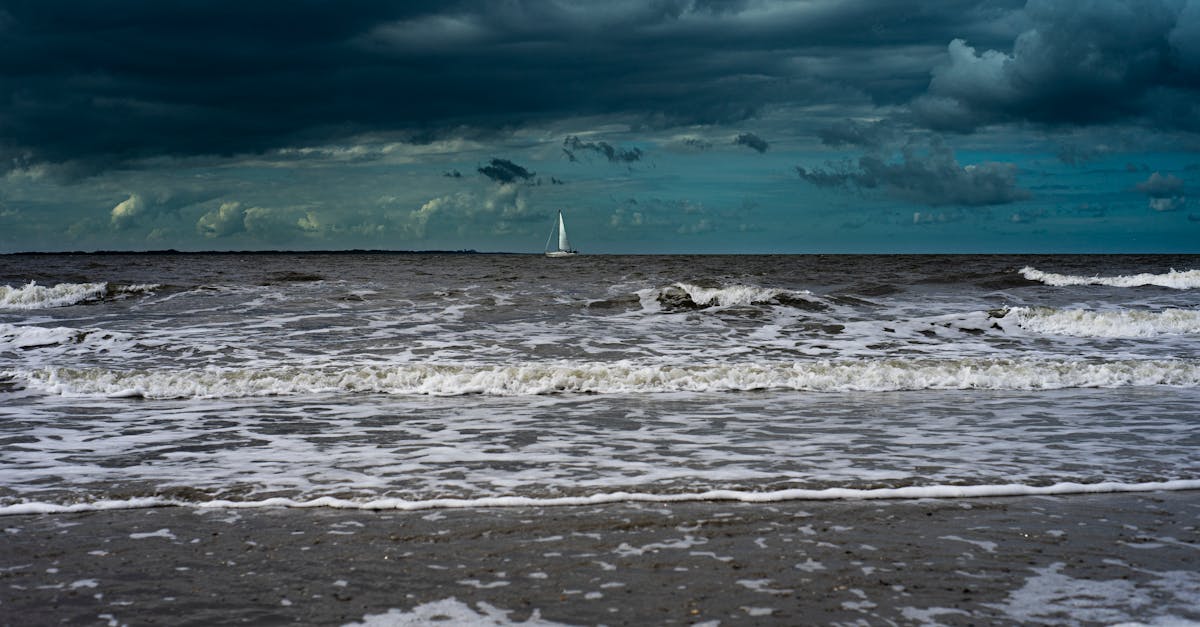
Oshen, a robotics company based in Plymouth, England, has developed small ocean robots that gathered data during Hurricane Humberto, a Category 5 storm in 2025. These C-Star robots, about four feet long, rode out winds over 150 miles per hour and low pressure in the storm's eyewall near the U.S. Virgin Islands. The company founded by sailor Anahita Laverack now works with groups like the National Oceanic and Atmospheric Administration to improve weather tracking.
Background
Anahita Laverack started her path to Oshen after trying to build a small robot boat for a race across the Atlantic. In 2021, she joined the Microtransat Challenge, where teams send wind-powered micro-robots from Europe to North America. Her boat did not make it, like most others. She saw that a big problem was the lack of good data on ocean conditions and weather at sea. Sailors and engineers had little information on waves, winds, and currents far from shore.
Laverack talked to people at ocean conferences. They wanted ocean data but had no easy way to get it. Some even offered to pay her to collect it. That pushed her to start a business. In April 2022, she teamed up with Ciaran Dowds, an electrical engineer, to launch Oshen. The goal was simple: build cheap robots that could stay at sea for months and send back live data.
The team spent years testing. They took prototypes to the water right after building them on shore. Summer tests went fine. Winter brought rough seas with storms and big waves. Laverack and her team went out in dangerous conditions to recover broken robots. They learned fast. The robots needed to be tough, low-cost, and able to work in groups. Other companies made robots that were cheap or tough or easy to send out in numbers. Oshen aimed for all three.
By 2025, the C-Stars were ready. These wind-powered boats use solar panels for sensors. They measure wind speed and direction, sea temperature, air temperature, pressure, and humidity. Data goes out every two minutes by satellite. They also take photos and video. The bots are small enough to ship easily and launch from any boat.
Key Details
Oshen first caught the eye of NOAA two years ago. The U.S. weather agency wanted help tracking hurricanes. Oshen's robots were not ready then. But after tests in U.K. winter storms, NOAA called back in 2025, just before hurricane season. Oshen built 15 C-Stars fast and sent them over.
Deployment in Hurricane Humberto
Five C-Stars went into the water near the U.S. Virgin Islands, where NOAA expected Hurricane Humberto. Three of them met the storm head-on. One reached the eyewall of the Category 5 hurricane on September 28, 2025. It recorded air pressure at 955 millibars and gusts over 150 miles per hour. Sunlight readings showed it entered the edge of the eye. Two others gathered data when Humberto was Category 4.
The National Hurricane Center used this data in its forecast discussion that day. No other uncrewed boat had sent data from inside a Category 5 storm before. The robots lost some parts but kept sending info through the whole event.
“The C-Stars collected valuable data from the strongest part of Hurricane Humberto and successfully transmitted it in near-real-time,” said Greg Foltz, an oceanographer at NOAA’s Atlantic Oceanographic and Meteorological Lab.
NOAA teamed with Oshen and the University of Southern Mississippi for the project. They deployed seven C-Stars total for the season. Later, two more launched from North Carolina for Hurricane Imelda. The team drove them from Mississippi in under 48 hours and used a local boat service to put them in the water. Those bots tracked data across the Atlantic even if they missed the storm.
Oshen now has deals with government agencies in the U.K. and the U.S. for weather and defense work. The robots form lines in hurricane paths, like in the Caribbean's Hurricane Alley. More stay ready for quick sends. Each swarm gives constant data over wide areas.
“This opens up the possibility of more routine use of C-Stars for hurricane data collection in the future in support of hurricane research and forecasting,” Foltz said.
What This Means
These robots change how we watch storms. Old sensors cost a lot and take big ships or planes to place. They cover small spots and hard to move. C-Stars go out cheap and in groups. One company source said hundreds could deploy when needed. That gives better pictures of ocean and air where hurricanes grow strong.
Data from the eyewall helps predict if a storm will get worse. Forecasters now get surface info they missed before. The bots work in rough seas that sink bigger tools. Oshen plans more tests through the hurricane season into November 2025.
The company moved to Plymouth, a hub for sea tech. Demand grows from defense groups too. They watch ocean spots for security. Laverack said the firm will seek investment soon to build more. Tests in U.K. storms proved the design. Now hurricanes show it works at the worst level.
Groups like NOAA see long-term use. If reliable, C-Stars could join main tools for storm tracking. They fill gaps in hard-to-reach spots. Quick setup from any coast speeds response. Low cost means more coverage without big budgets.
Oshen keeps improving. Robots now last 100 days at sea. Swarms collect data non-stop. This first in a Category 5 sets a mark. Weather teams worldwide take note for their own storms.