Scientists in Antarctica have found strange signals deep in the ice that could answer basic questions about the universe. Particles in Antarctic ice hit detectors and send out radio waves, giving clues about far-off cosmic events like black holes and star crashes. Teams from places like Penn State and NASA fly balloons high over the ice to catch these signals. The work goes on now, with new tools drilling into the ice and balloons landing after long flights.
Key Takeaways
- Detectors in Antarctic ice pick up radio pulses from particles that travel near light speed from distant space events.
- Strange signals seen from 2016 to 2018 don't match known physics, but they're not new particles either.
- Upgrades to IceCube add hundreds of sensors a mile deep in the ice to spot more of these ghost particles.
- A new balloon mission called PUEO just wrapped up 23 days aloft, bringing back data that might solve old puzzles.
Background
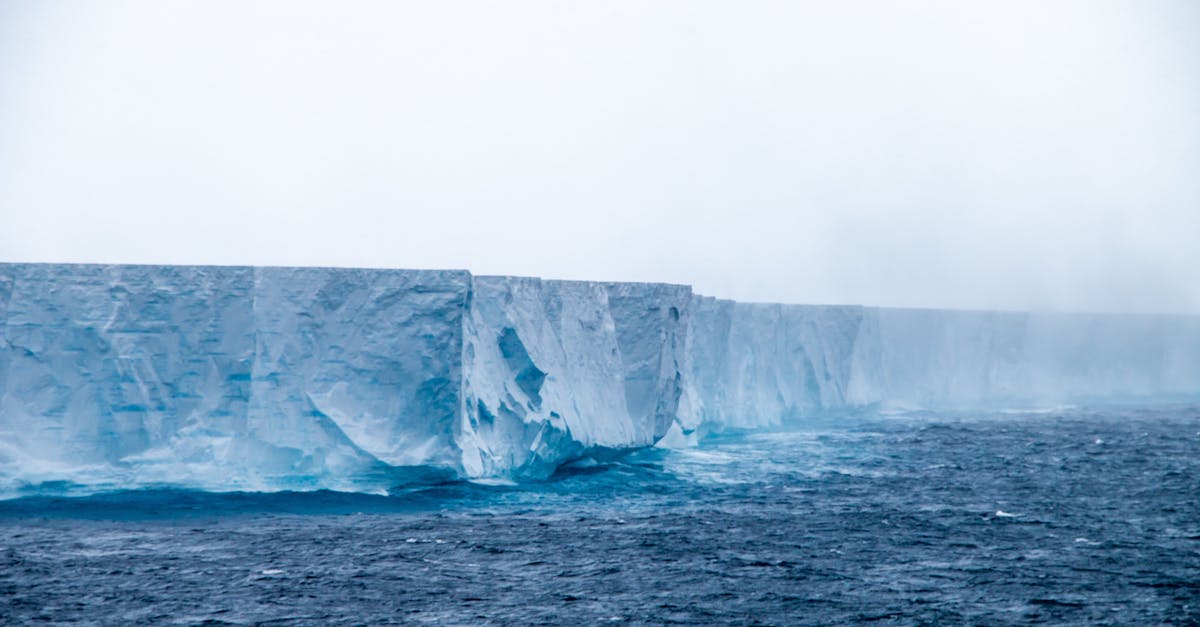
Antarctica's ice sheet covers an area bigger than the U.S. and goes down more than a mile in spots. It's cold. Clear. Perfect for spotting tiny particles from space. These particles, mostly neutrinos, zip through space without bumping into much. They hit the ice, make a flash or radio wave. Detectors catch that. Scientists have chased them for years.
It started with balloons. NASA's ANITA flew high over the ice from 2016 to 2018. Antennas pointed down. They looked for radio waves from cosmic rays slamming into air or ice. Most signals made sense. But some didn't. Pulses came from below the horizon. Like from deep under the ice. Or rock. That shouldn't happen. Radio waves can't travel through thousands of kilometers of rock without fading out.
Teams checked other detectors. IceCube buries strings of sensors in the ice near the South Pole. Pierre Auger spreads out in Argentina. Neither saw the same odd signals. So the mystery grew. Were these hints of unknown particles? Dark matter? Or just tricks of the ice and radio waves?
And now, work ramps up. IceCube just got bigger. From 86 strings to 92. Each string has sensors a mile down. Technicians drilled in 2023 through 2026. Three long field seasons. New photosensors catch better light flashes from neutrinos hitting ice atoms. This helps map neutrino changes, called oscillations. It spots cosmic rays too. Even old data gets a fresh look.
Balloons keep flying. PUEO, the new one, means Payload for Ultrahigh Energy Observations. It floated 40 kilometers up for 23 days. Landed January 12, hundreds of miles from the South Pole. Crew grabbed the black box. 50 to 60 terabytes of data. Headed to Chicago now. Scientists expect answers in a year.
Why Antarctica? Ice lets radio waves travel far. No city noise. No interference. Neutrinos rain down all the time. Most slip by. Rare high-energy ones pack info from black holes, neutron star crashes. Places where energy goes wild. Related quantum tech funding shows growing interest in particle hunts.
Key Details
The odd signals puzzle everyone. Stephanie Wissel, a physics professor at Penn State, worked on ANITA. Her team saw pulses at steep angles. 30 degrees below the ice surface. Math says they passed through rock. Should be gone. But there they were.
"The radio waves that we detected nearly a decade ago were at really steep angles, like 30 degrees below the surface of the ice," said Stephanie Wissel.
She says it's not neutrinos. Not tau neutrinos anyway. Those make tau leptons. Leptons burst out of ice, decay in air. Make showers. Radio pulses follow. ANITA caught some. But the weird ones? No match in other data.
How Detectors Work
Balloons hover high. Antennas aim down. Neutrinos hit ice. Boom. Radio emission. Travels up clean. IceCube does it different. Drills holes. Drops strings. Each string has dozens of glass orbs. Neutrinos smack ice nearby. Make blue light. Cherenkov light. Sensors see it. Pinpoint direction. Energy.
PUEO improves on ANITA. Better antennas. Catches fainter signals. Targets ultra-high energy neutrinos. Ones stronger than lab machines make. Like the Large Hadron Collider. But from space.
Cross-checks rule out noise. Models of cosmic rays. Air showers. Reflections off ice. Nothing fits the anomalies. IceCube traced one neutrino to a blazar. Galaxy with a huge black hole. Mapped Milky Way matter too. Big Bang recreations at RHIC echo these particle chases.
Data crunching takes time. PUEO's haul? A month just to run numbers. Then calibrate. Sort. Hunt for gold.
What This Means
These particles act like messengers. Telescopes see light bent by dust. Blocked. Neutrinos cut straight through. Nearly speed of light. Untouched. One signal tells of events light-years away. Supernovas. Black hole feasts. Star deaths.
Anomalies narrow options. Not new physics yet. But radio tricks in ice? Horizon effects? PUEO's better tools might crack it. Help spot real neutrinos later. Upgrade to IceCube means sharper views. Better neutrino types. Cosmic ray maps. Past data sharper too.
Finding rare high-energy ones opens doors. Where do they come from? Extreme spots. Could tie to the most powerful ghost particle ever caught. Still a riddle. Primordial black holes? Universe birth? Answers wait in ice data.
Frequently Asked Questions
What are neutrinos?
Tiny particles. Almost no mass. No charge. Pass through most stuff. Billions hit you every second. From sun. Space. Atmosphere.
Why use Antarctic ice for detection?
Ice is clear. Thick. Cold keeps it stable. Radio waves travel well. Quiet spot. No human signals mess it up.
Will we solve the mystery soon?
Data from PUEO takes a year to check. IceCube upgrades help now. More flights planned. Answers build slow.
Frequently Asked Questions
What are neutrinos?
Tiny particles. Almost no mass. No charge. Pass through most stuff. Billions hit you every second. From sun. Space. Atmosphere.
Why use Antarctic ice for detection?
Ice is clear. Thick. Cold keeps it stable. Radio waves travel well. Quiet spot. No human signals mess it up.
Will we solve the mystery soon?
Data from PUEO takes a year to check. IceCube upgrades help now. More flights planned. Answers build slow.