

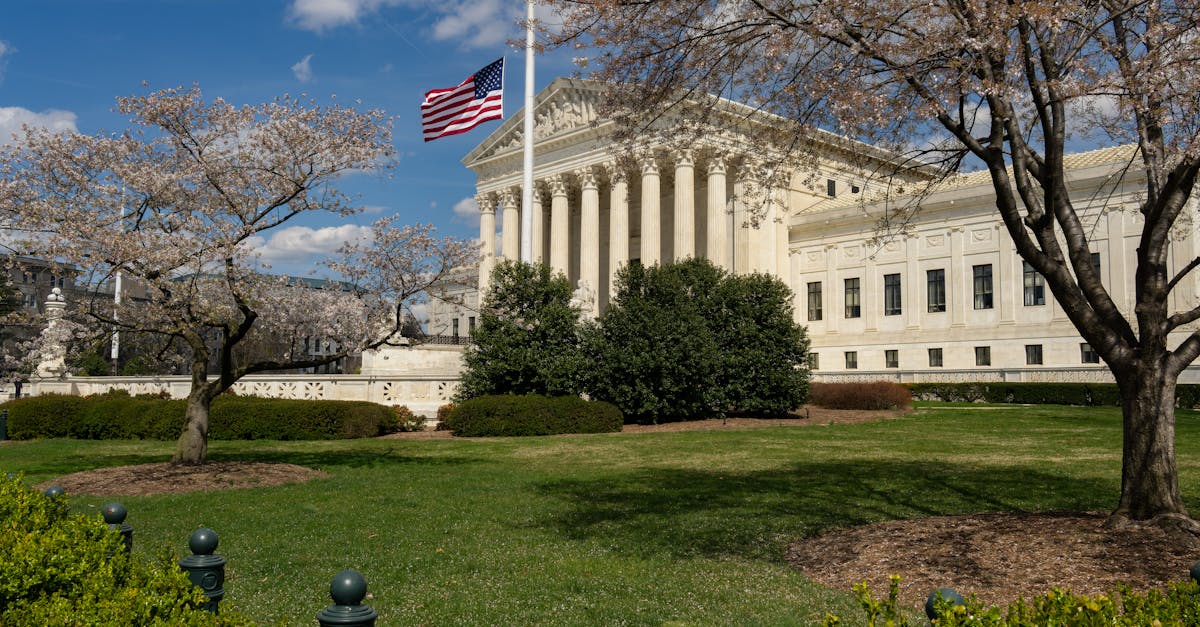
Federal Reserve Chairman Jerome Powell will attend Supreme Court oral arguments on Wednesday as the court considers President Trump's attempt to fire Lisa Cook, a member of the central bank's Board of Governors. Powell's attendance marks a significant moment in an escalating conflict between the Trump administration and the Federal Reserve over interest rate policy and executive power.
The case centers on whether Trump has the legal authority to remove Cook "for cause" under the Federal Reserve Act, which limits presidents' power to fire Fed governors to situations involving misconduct or incompetence. The dispute began in August when Trump announced Cook's firing, citing allegations that she made misrepresentations on mortgage documents for two properties—one in Atlanta and another in Ann Arbor, Michigan. Cook has denied the allegations and has not been charged with any criminal offenses.
Background
The conflict between Trump and the Federal Reserve extends well beyond Cook's employment status. Throughout his new administration, Trump has repeatedly attacked Fed policy, particularly the central bank's interest rate decisions. He has called Powell "incompetent" and "crooked" over the Fed's approach to monetary policy, which differs from the president's stated preferences.
In August, the Federal Housing Finance Agency released one of Cook's old mortgage applications, marking a property as a "primary residence" rather than a "vacation home." FHFA Director Bill Pulte accused Cook of mortgage fraud based on this discrepancy. Trump immediately called for her resignation on social media, and five days later sent Cook a letter firing her for cause.
Cook challenged the firing in federal court, and lower courts allowed her to remain in her position while she pursued a legal challenge. The Supreme Court declined to grant Trump's request for an emergency stay in October and scheduled the case for oral arguments in January.
Key Details
Powell's decision to attend the arguments carries symbolic weight at a moment when the Federal Reserve faces unprecedented pressure from the executive branch. A source directly familiar with Powell's plans confirmed on Monday that he will be present for the arguments.
The case raises fundamental questions about presidential power and the independence of the Federal Reserve. The Federal Reserve Act grants governors 14-year terms and restricts the president's ability to remove them to situations involving cause. Trump argues that he properly identified cause based on Cook's alleged mortgage misrepresentations. Cook's legal team argues that the evidence is thin and that courts should be able to review whether Trump actually had legitimate cause to fire her.
The Broader Conflict
Powell's attendance comes at a particularly tense moment. Earlier this month, the Federal Reserve received grand jury subpoenas from the Justice Department as part of a criminal investigation into Powell's June 2025 testimony before the Senate Banking Committee. The investigation concerns the Fed's multi-year renovation project. Powell has characterized the criminal probe as retaliatory.
"The threat of criminal charges is a consequence of the Federal Reserve setting interest rates based on our best assessment of what will serve the public, rather than following the preferences of the president," Powell said in a video message last week.
Powell's term as Federal Reserve chair ends in May, though his position as a Fed Board member extends to early 2028. The timing of the criminal investigation and Cook's firing has raised concerns about whether the administration is using legal mechanisms to pressure the central bank on policy matters.
The Legal Questions
The Supreme Court will grapple with several distinct issues. First, whether Cook was entitled to a hearing before her firing became final. Second, whether courts can review the president's decision to fire a Fed governor at all. Third, if courts can review the firing, what standard of evidence is required to determine whether Trump had legitimate cause.
Trump's legal position holds that when a president provides a stated cause for removal, courts should not review his factual findings or second-guess his judgment. Cook's legal team argues that courts must be able to examine whether the president's stated cause actually exists and whether it meets the legal definition of cause under the Federal Reserve Act.
The factual record in the case remains disputed. Trump's firing letter cited Cook's "deceitful and potentially criminal conduct" and her "gross negligence in financial transactions." These conclusions are drawn from a single mortgage document, however, and Cook has highlighted other documents that she argues undercut the fraud allegations.
What This Means
The Supreme Court's decision will have implications far beyond Cook's employment. A ruling that allows the president broad power to remove Fed governors could fundamentally alter the central bank's independence. The Federal Reserve's ability to set interest rates without political pressure has long been considered essential to sound monetary policy.
Conversely, a ruling that restricts the president's removal power could establish precedent for other independent agencies and officers. The case touches on basic questions about how much power presidents have over the executive branch and whether statutory protections for certain officials actually limit that power.
The court's decision will also occur against the backdrop of ongoing tension between the Trump administration and Powell. Powell's public statements characterizing the criminal investigation as retaliatory and his attendance at Wednesday's arguments signal that the Federal Reserve intends to defend its institutional independence.