Scientists have confirmed that a colossal organism that lived 407 million years ago belongs to a completely unknown branch of life that has no living relatives on Earth today. The discovery, based on fossils found in Scotland, overturns decades of debate about what Prototaxites actually was and reveals it as something far stranger than previously thought.
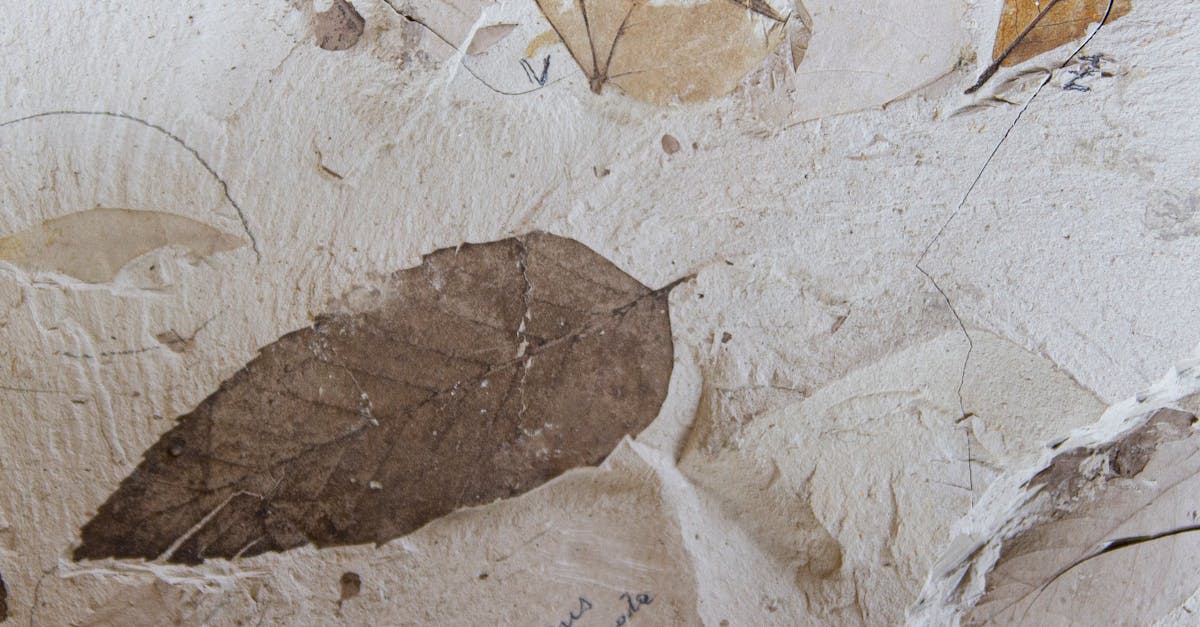
The fossil, preserved in exceptional detail in a sedimentary deposit near Rhynie in Aberdeenshire, shows that Prototaxites was neither a fungus nor a plant. Instead, researchers say it was a unique form of complex life that evolved on its own and then vanished entirely, leaving scientists with only fossilised remains to understand what it was.
Background
Prototaxites has puzzled scientists for over 160 years. When researchers first studied these fossils, they thought they were looking at ancient fungi. That theory dominated scientific thinking for much of the 20th century, but it never sat entirely comfortably with experts who noticed something was off about the organism's structure and composition.
The fossils come from the Rhynie chert, one of the world's oldest preserved terrestrial ecosystems. The rock formation, dating back to the Early Devonian period, contains an unusually complete snapshot of ancient life. Because the rock preserved organisms in such fine detail, it offers scientists a rare window into what early land life looked like before trees and forests dominated the landscape.
Prototaxites itself was enormous for its time. These organisms grew to more than eight metres tall, making them the largest known living things in their ecosystems. They would have towered over the smaller plants and animals that shared their world, standing like strange columns across the ancient landscape.
Key Details
A team of researchers led by scientists at the University of Edinburgh and National Museums Scotland conducted a detailed analysis of the largest known Prototaxites specimen ever found at the Rhynie site. They examined the fossil's structure and chemistry using advanced techniques, comparing it directly with other organisms preserved in the same rock formation.
The researchers looked for specific chemical signatures that would identify Prototaxites as a fungus. Fungi have distinctive molecular markers in their cell walls, particularly a compound called perylene that fungi produce. When the team analysed the Prototaxites fossil, these fungal signatures were completely absent.
"It's really exciting to make a major step forward in the debate over prototaxites, which has been going on for around 165 years. They are life, but not as we now know it, displaying anatomical and chemical characteristics distinct from fungal or plant life, and therefore belonging to an entirely extinct evolutionary branch of life."
The structural analysis revealed something equally important. The internal organisation of Prototaxites did not match any known fungal structure. Fungi have specific ways of organising their internal tissues, and Prototaxites simply did not fit those patterns.
What Makes It Different
The fossil showed that Prototaxites was built from a substance similar to lignin, a compound that plants use to build rigid structures like wood. This was unexpected because fungi do not use lignin. Yet Prototaxites was not a plant either. Its overall structure, chemistry, and organisation simply did not match plants or fungi.
With both plant and fungal origins ruled out, researchers concluded that Prototaxites must belong to a completely separate lineage of complex life. It was an independent evolutionary experiment, a branch of the tree of life that evolved its own way of building large, complex organisms and then went completely extinct.
What This Means
This discovery changes how scientists understand the early history of life on land. The Devonian period, when Prototaxites lived, was a critical time. Plants were beginning to move onto land and develop new forms. Early forests were starting to emerge. Animals were adapting to terrestrial life. Into this world stepped Prototaxites, a giant organism unlike anything that exists today.
The existence of Prototaxites suggests that life experimented with different ways of building large, complex multicellular organisms. Most of those experiments failed and left no trace. Prototaxites is one of the few we can actually see because of the exceptional preservation at Rhynie.
The fossil has been added to the collections at the National Museum of Scotland in Edinburgh, where it will be available for future study. Scientists say there is much more to learn from the Rhynie chert and other fossils preserved there. The research demonstrates how new techniques and careful analysis of well-preserved specimens can solve mysteries that have puzzled science for more than a century.