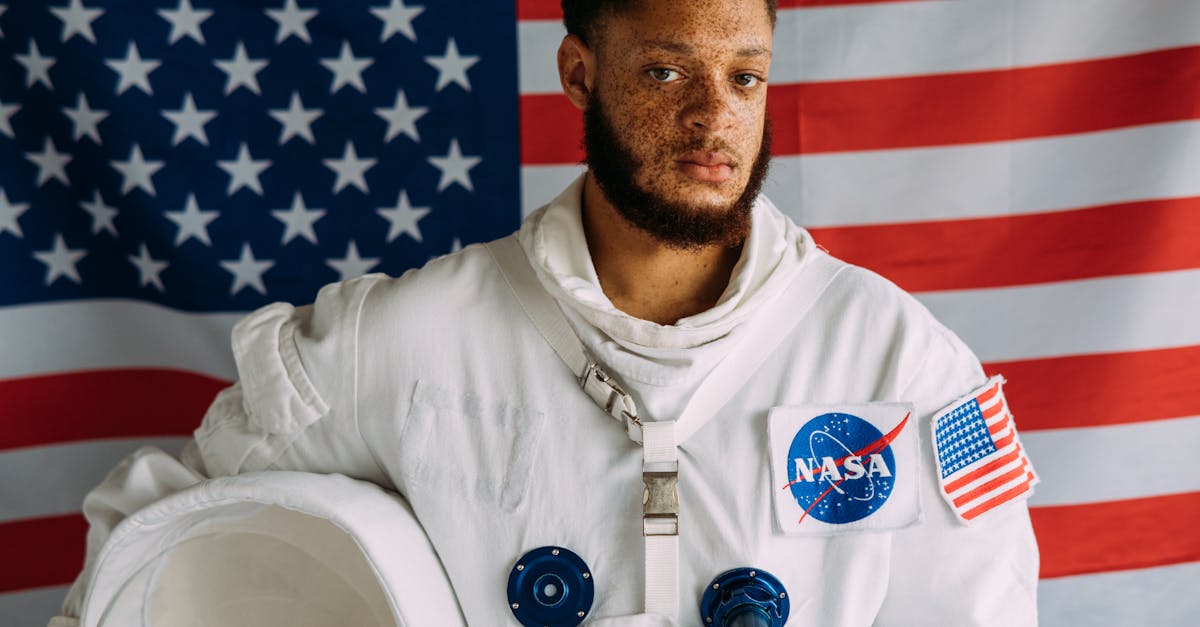
NASA astronaut Suni Williams has retired from the space agency after 27 years of service, ending a career marked by record-breaking achievements and pioneering work in human spaceflight. Her retirement became effective on December 27, 2025, just weeks after returning from her most recent mission to the International Space Station.
Williams, a 60-year-old Massachusetts native, completed three missions aboard the ISS and accumulated 608 days in space—the second-highest total for any NASA astronaut. Her final mission, which began in June 2024 as a planned 10-day test flight of Boeing's Starliner spacecraft, stretched into nine and a half months due to technical problems with the vehicle.
Background
Williams was selected by NASA as an astronaut in 1998 and launched to space for the first time in December 2006 aboard the space shuttle Discovery. That mission, designated STS-116, saw her serve as a flight engineer for Expeditions 14 and 15. During that flight, she completed four spacewalks totaling 29 hours and 17 minutes—a record at the time.
Her second spaceflight came six years later in July 2012, when she launched from the Baikonur Cosmodrome in Kazakhstan for a 127-day mission. During that flight, she served as commander of Expedition 33 and performed three spacewalks to repair equipment on the space station.
Beyond her time in orbit, Williams held several important roles within NASA. She served as deputy chief of the Astronaut Office after her first flight and later became director of Operations in Star City, Russia. More recently, she helped develop training methods for future Moon landings.
Key Details
Williams' most recent mission highlighted both her skills and the challenges of modern spaceflight. She and fellow astronaut Butch Wilmore launched on Boeing's Starliner for what was supposed to be a brief test flight of the new spacecraft. Instead, mechanical problems with the vehicle forced NASA to keep them on the space station far longer than expected.
"Space is my absolute favourite place to be. It's been an incredible honour to have served in the Astronaut Office and have had the opportunity to fly in space three times." – Suni Williams
The pair eventually returned to Earth in March 2025 aboard a SpaceX Crew-9 capsule instead of the Starliner they had arrived in. During their extended stay, Williams ranked sixth among American astronauts for longest single spaceflight, tied with Wilmore at 286 days.
Record-Breaking Achievements
Throughout her career, Williams set numerous milestones in human spaceflight. She completed nine spacewalks totaling 62 hours and 6 minutes—more than any other female astronaut and fourth-most in NASA history. She also became the first person to run a marathon in space, completing the 26.2-mile race while orbiting Earth during one of her earlier missions.
Her 608 total days in space places her second only behind NASA astronaut Jeff Williams, who has logged more cumulative time in orbit.
What This Means
Williams' retirement marks the end of an era in NASA's human spaceflight program. NASA Administrator Jared Isaacman described her as "a trailblazer in human spaceflight" who shaped the future of exploration through her leadership aboard the space station and her role in opening doors for commercial missions to low Earth orbit.
Her work helped lay groundwork for future missions to the Moon and Mars. The experience and knowledge she gained across three decades of service contributed to NASA's long-term exploration goals, particularly the Artemis program designed to return humans to the lunar surface.
Williams' career also reflected the evolution of space exploration itself. She flew on space shuttles, spent extended periods on the International Space Station, and participated in testing next-generation commercial spacecraft. Her presence on these different platforms demonstrated how human spaceflight has transformed over the past three decades.
Vanessa Wyche, director of NASA's Johnson Space Center in Houston, noted that Williams' contributions would inspire future generations of explorers. Her retirement comes at a time when NASA is ramping up its exploration ambitions and preparing for increasingly ambitious missions beyond low Earth orbit.