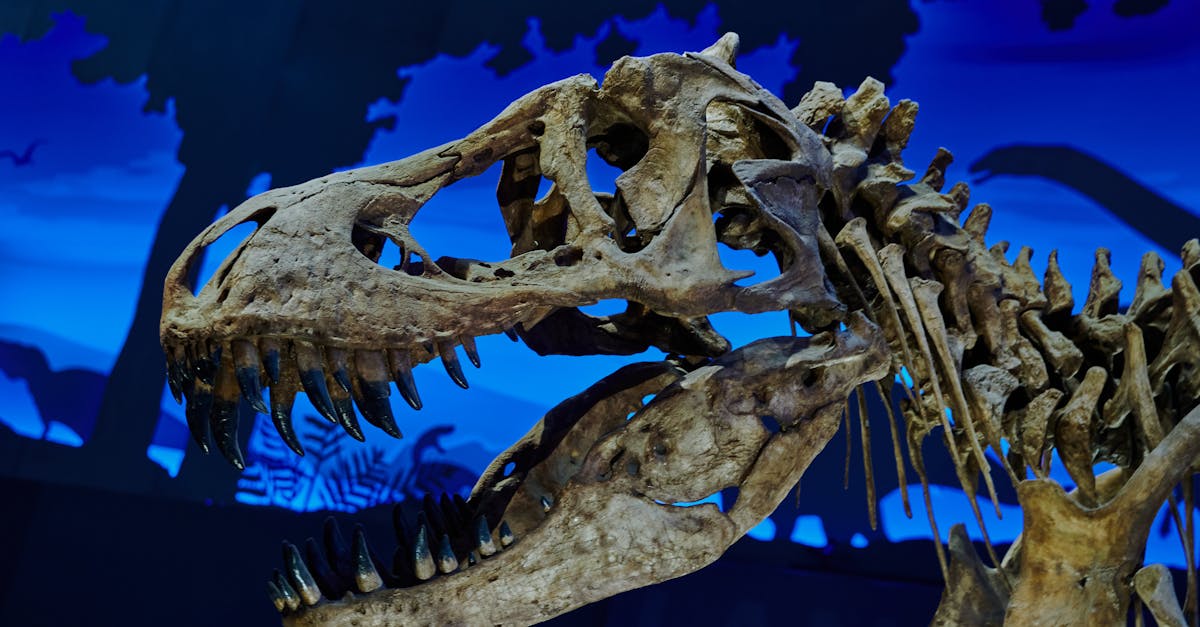
Scientists have found that Tyrannosaurus rex, the giant predator from 68 million years ago, took around 40 years to grow to its full adult size of about eight tons. This comes from a detailed look at bones from 17 different specimens, from young ones to the biggest adults. The work, led by researchers at Oklahoma State University, changes what we knew before, when people thought T. rex stopped growing at age 25. The study came out this week in the journal PeerJ.
Background
For years, experts have looked at lines inside T. rex leg bones, much like rings in a tree trunk, to figure out how old the animals were and how fast they grew. These lines form each year as the dinosaur adds bone, slowing down in tough seasons and speeding up in good ones. Past work on just a few bones said T. rex grew fast as a teen and hit full size by 25. That made it seem like a quick riser to the top of the food chain.
But those early studies missed some lines, especially tight groups of thin ones that looked like short pauses in growth. They also used regular light to see the bones, which hid fainter rings. Now, with more fossils and better tools, a team has put together a fuller story. They studied bones from places like Montana and Wyoming, where many T. rex remains turn up. The goal was to map growth from baby to giant over the whole life span.
The lead researcher, Holly Woodward from Oklahoma State University Center for Health Sciences, put together the biggest set of T. rex bone data so far. Her team sliced leg bones into thin pieces, ground them down until light passed through, and checked them under different lights, including cross-polarized light. This showed hidden rings that others skipped. They also built math models to link growth from different animals into one smooth curve.
"This is the largest data set ever assembled for Tyrannosaurus rex," said Holly Woodward, professor of anatomy and paleontology at Oklahoma State University. "Examining the growth rings preserved in the fossilized bones allowed us to reconstruct the animals' year-by-year growth histories."
Nathan Myhrvold, a mathematician who helped with the numbers, said the new method joins pieces from many bones to show the full picture.
"We came up with a new statistical approach that stitches together growth records from different specimens to estimate the growth trajectory of T. rex across all stages of life in greater detail than any previous study," Myhrvold explained.
Key Details
The team looked at 17 tyrannosaur bones, covering juveniles under 1,000 pounds up to old adults near eight tons. They cut 3-millimeter slices from lower leg bones, polished them thin, and counted every line. Past counts stopped at thicker bands, but this group included bunched thin lines and faint ones under special light. The math model then combined data from 12 good matches to draw the growth path.
Results show T. rex grew steadily but slowly. Babies added weight fast at first, but growth stretched out longer than thought. Full size hit at 40 years, not 25. Some famous bones, like those from "Jane" and "Petey," did not fit the curve. Stats suggest they might belong to other tyrannosaurs, not true T. rex. This hints at more than one kind in what we call the T. rex group, maybe different species or types.
How They Counted the Rings
Bone slices show only the last 10 to 20 years, like a tree stump's outer edge. To get the early years, researchers matched patterns across fossils. The new stats cut down guesswork and matched real bone measures better. Growth topped out at 17,000 pounds for the biggest ones, shaking the ground as they walked.
The work matches growth in other tyrannosaurs, not the super-fast spurt some said for T. rex alone. Thin rings point to years of stress, maybe from little food or cold. This fits the late Cretaceous world, with changing seas and plants.
What This Means
A 40-year growth means young T. rex stayed small longer, under 20 feet and a few tons for decades. They hunted with packs of mid-size meat-eaters like Albertosaurus or faced rivals like Triceratops young. Only as old giants did they rule alone, too big for most fights. This slow climb filled different roles over time: sneaky teen hunter, then mid-pack brawler, finally top killer.
For dinosaur science, the methods could change how we read other fossils. Counting all rings, even tight or faint ones, might stretch life spans for Allosaurus or Spinosaurus too. The species question opens doors. If Jane and Petey are not T. rex, we may split the group into types with their own growth paths. Woodward noted T. rex keeps teaching us after 100 years of digs.
"Even after more than a century of study, Tyrannosaurus rex continues to surprise paleontologists," Woodward said. "By combining expanded sampling, new statistics and careful bone analysis, the new study offers a clearer, more accurate picture of Tyrannosaurus rex as a living animal, growing from juvenile to giant."
This pushes us to rethink ecosystems 68 million years ago. Slow growers took time to dominate, competing hard before getting huge. Museums with T. rex skeletons may relabel some as kin species. Field teams will hunt more bones with these tools in mind, checking old finds again. The king dinosaur's story grows longer, step by steady step.