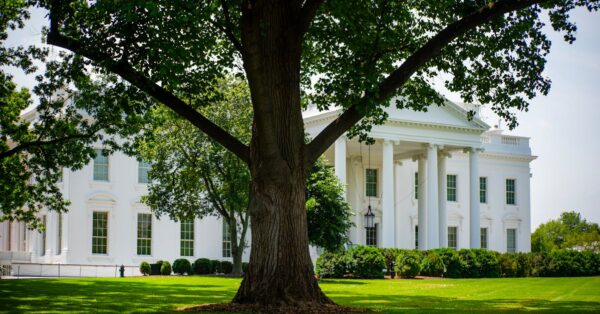


The White House has established a new Board of Peace to oversee the rebuilding of Gaza and manage its transition to civilian governance. The board brings together seven founding executive members, including former UK Prime Minister Tony Blair and US Secretary of State Marco Rubio, with President Donald Trump serving as chairman.
The announcement came after more than a year of fighting between Israel and Hamas ended with a ceasefire that took effect in October 2025. The board's creation represents a major step in implementing Trump's 20-point plan for Gaza, which was endorsed by the United Nations Security Council.
Background
The conflict between Israel and Hamas began with the militant group's attack on October 7, 2023, which triggered two years of intense fighting and humanitarian crisis in Gaza. The ceasefire that began in October 2025 has largely held, though both sides have accused each other of violations. Israeli forces have killed more than 400 Palestinians since the ceasefire began, according to Gaza health officials, while Israel says it has targeted militants or responded to ceasefire breaches.
The new governance structure reflects international efforts to move Gaza from conflict toward reconstruction and stability. Alongside the Board of Peace, the White House has established a separate Palestinian technocratic committee to handle day-to-day administration in Gaza during the transition period.
Key Details
The seven founding executive board members are Secretary of State Marco Rubio, Special Envoy to the Middle East Steve Witkoff, Jared Kushner (the president's son-in-law), Sir Tony Blair, Marc Rowan, Ajay Banga (president of the World Bank), and Robert Gabriel.
Each board member will oversee specific responsibilities related to Gaza's recovery. These include governance capacity-building, regional relations, reconstruction efforts, investment attraction, large-scale funding, and capital mobilization. The White House indicated that additional board members would be announced in coming weeks.
The Palestinian Administration
Running parallel to the Board of Peace is the National Committee for the Administration of Gaza, led by Dr. Ali Sha'ath, a former deputy minister in the Palestinian Authority. This 15-member committee will handle the day-to-day operations of Gaza, including restoring public services, rebuilding civil institutions, and stabilizing daily life. The committee will work under the oversight of the Board of Peace, with former UN Middle East envoy Nickolay Mladenov serving as the High Representative for Gaza, acting as the link between the two bodies.
International Involvement
The governance structure also includes a Gaza Executive Board with representatives from Turkey, Qatar, Egypt, and the United Arab Emirates. Turkish Foreign Minister Hakan Fidan and Qatari diplomat Ali Al-Thawadi are among the members. An International Stabilization Force, commanded by Major General Jasper Jeffers, will handle security operations and support the disarmament of Hamas.
What This Means
Blair's appointment to the board marks his return to Middle East diplomacy after stepping down as representative of the Quartet—a group comprising the United States, European Union, Russia, and the United Nations focused on Israeli-Palestinian peace—after being deemed too close to Israel. His inclusion has already sparked controversy given his role in the 2003 invasion of Iraq, an event that remains deeply divisive in the Middle East.
Trump acknowledged the potential sensitivity of Blair's appointment last October, telling reporters: "I've always liked Tony, but I want to find out that he's an acceptable choice to everybody."
"I thank President Trump for his leadership in establishing the Board of Peace and am honoured to be appointed to its executive board. It's been a real privilege to work with Steve Witkoff and Jared Kushner and their outstanding team." – Tony Blair
The board structure represents a significant international commitment to Gaza's reconstruction. Trump has described his 20-point plan as an "extraordinary achievement," and the board will be responsible for ensuring its implementation. The plan aligns with United Nations Security Council Resolution 2803, passed in 2025, which endorsed Trump's approach and welcomed the Board of Peace's establishment.
The appointment of experienced figures from business, diplomacy, and development suggests an emphasis on practical reconstruction over purely political solutions. Banga's role as World Bank president indicates a focus on mobilizing financial resources, while the inclusion of regional representatives from Turkey, Qatar, Egypt, and the UAE signals an attempt to build Arab consensus around Gaza's future.
The governance model depends heavily on cooperation from all parties. Both Israel and the Palestinian administration must work with the Board of Peace and the International Stabilization Force to move forward. Netanyahu has indicated he will not move toward final resolution until the remains of the last Israeli hostage are returned, a condition that could affect the timeline for full implementation of the plan.
The coming weeks will reveal additional board appointments and clarify how the various bodies will coordinate. The success of this framework will likely determine whether Gaza can move from conflict toward genuine reconstruction and stable governance.