Denmark's foreign minister Lars Løkke Rasmussen said Wednesday that a "fundamental disagreement" with President Donald Trump over Greenland remains unresolved after high-level talks in Washington. The meeting, which included discussions with Vice President J.D. Vance and Secretary of State Marco Rubio, produced no breakthrough on Trump's stated goal of acquiring the semiautonomous Danish territory.
"The President has made his view clear, and we have a different position. Ideas that would not respect the territorial integrity of the Kingdom of Denmark and the right of self-determination of the Greenlandic people are totally unacceptable." – Lars Løkke Rasmussen, Denmark's Foreign Minister
Greenland's foreign minister Vivian Motzfeldt attended the meeting and reinforced the island's position, saying that while Greenland is willing to strengthen security cooperation with the United States, that does not mean accepting American ownership.
Background
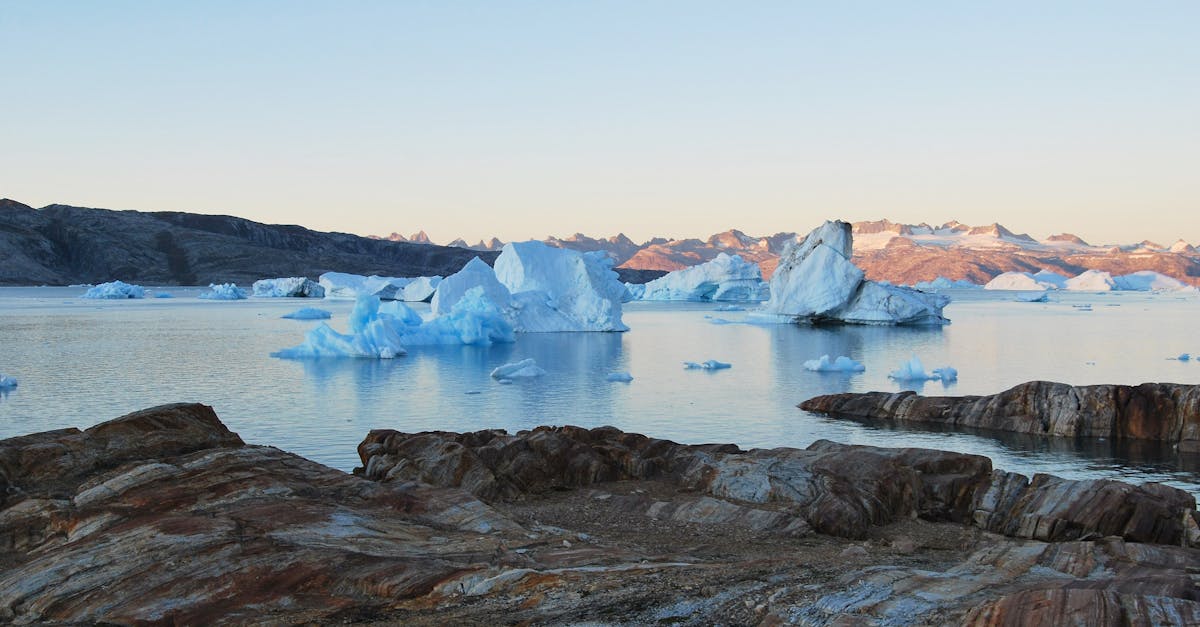
Greenland is a semiautonomous territory within the Kingdom of Denmark, which has controlled the island for nearly 300 years and retains responsibility for its defense and foreign policy. The territory sits in the Arctic, a region of growing geopolitical importance due to climate change and shifting global power dynamics.
Trump has repeatedly insisted over recent weeks that the United States must acquire Greenland for national security reasons. He has argued that NATO should support a U.S. takeover and warned that anything short of American control would leave the island vulnerable to China or Russia. On the morning of the White House talks, Trump posted on social media that NATO should lead efforts to secure Greenland for the Golden Dome missile defense project.
The dispute has escalated tensions within the NATO alliance, with Denmark and Greenland both firmly rejecting the acquisition proposal as a violation of international law and principles of self-determination.
Key Details
During Wednesday's press conference, Rasmussen described the talks as "frank but also constructive," though he made clear the two sides remain far apart. He disputed Trump's claims about security threats to Greenland, noting that according to Danish intelligence, there has not been a Chinese warship in the Arctic for about a decade.
"According to our intelligence, we haven't had a Chinese warship in Greenland for a decade or so. There is not an instant threat from China or Russia that we cannot accommodate." – Lars Løkke Rasmussen
Rasmussen pointed out that the United States already has significant military access to Greenland under a 1951 defense agreement that allows Washington to establish and expand military bases with the consent of Danish and Greenlandic authorities. He said Denmark would be open to examining any additional security requests from the U.S. within those existing frameworks.
Greenland's Prime Minister Jens-Frederik Nielsen stated Tuesday that if forced to choose, "we choose Denmark. We choose NATO. We choose the Kingdom of Denmark. We choose the EU." Trump responded by saying he did not know Nielsen and that his position would be "a big problem for him."
NATO Response and Military Buildup
In response to the escalating dispute and Trump's rhetoric, Denmark and its NATO allies have begun visibly reinforcing their military presence in Greenland. Denmark's defense minister Troels Lund Poulsen announced Wednesday that Denmark would increase military activity in and around the territory, citing an increasingly unpredictable security environment.
Denmark plans to commit additional funds for military capabilities including ships, drones, and fighter jets. Several European NATO allies confirmed they were also sending personnel to Greenland. Sweden said officers from its Armed Forces had arrived to prepare for activities connected to Operation Arctic Endurance, a Danish military exercise. Norway said it would send two military personnel to explore further cooperation with allies. Germany's Defense Ministry announced it was dispatching a reconnaissance team of 13 military personnel to Greenland from January 15 to 17 to assess possible contributions to regional security and maritime surveillance.
Denmark noted it has already contributed 15 billion dollars to Arctic security over the past two years and has pressed the U.S. and other NATO countries to do more through the alliance.
What This Means
The failed talks and continued disagreement signal a deepening rift between Trump and longtime European allies over Arctic strategy. The military buildup by Denmark and NATO countries suggests Europe is preparing to take greater responsibility for Greenland's security rather than ceding control to Washington.
Both sides agreed to establish a high-level working group to explore whether some of Trump's stated security concerns could be addressed without crossing what Denmark describes as its "red lines." The group is expected to hold its first meeting within weeks, though Rasmussen expressed uncertainty about whether a path forward exists.
Rasmussen said the constant threats and claims from Trump make productive dialogue difficult. The dispute reflects broader tensions within NATO as Trump takes an increasingly transactional approach to the alliance, demanding greater military spending and questioning the value of traditional partnerships.