Saturn's largest moon, Titan, may have formed when a lost moon crashed into an earlier version of itself hundreds of millions of years ago. This huge smash-up didn't just reshape Titan. It likely triggered changes across Saturn's moon system and set the stage for the planet's stunning rings.
Key Takeaways
- Titan probably formed from a collision between two proto-moons around 400 million years ago.
- The crash created debris that became Hyperion, Saturn's tumbling small moon.
- Titan's odd orbit and smooth surface match signs of a recent giant impact.
- This event may have destabilized inner moons, leading to Saturn's rings about 100 million years ago.
Background
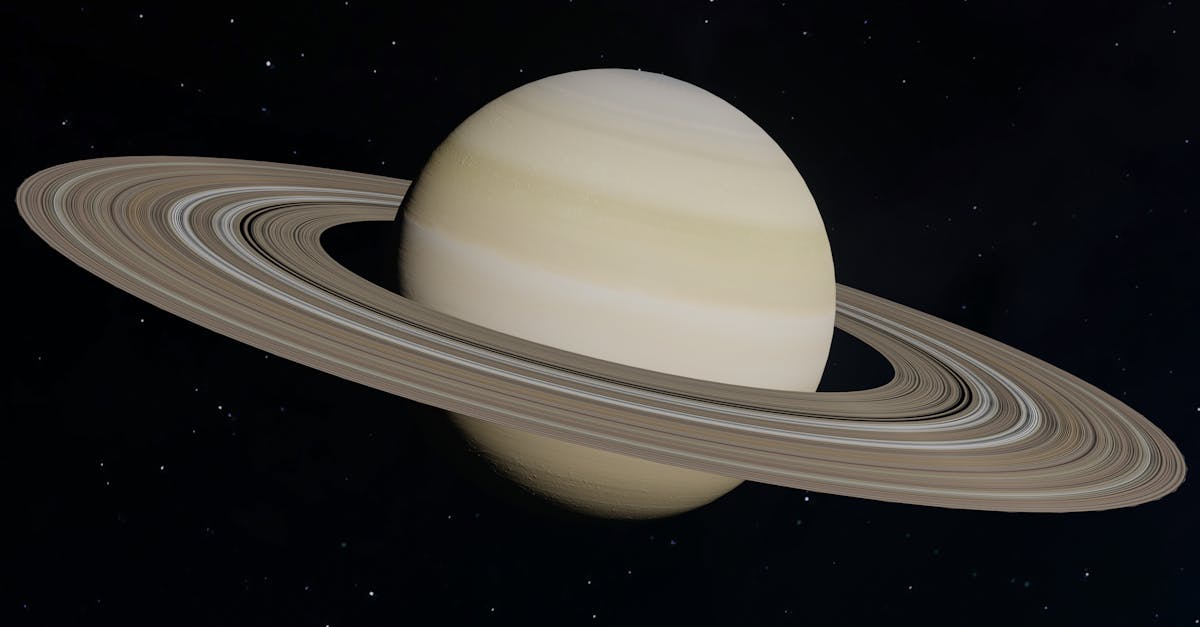
Saturn has always puzzled scientists with its setup. The planet sits there with its iconic rings and a bunch of moons. Titan stands out as the biggest. It's larger than the planet Mercury. Thick clouds hide its surface. But under them lie lakes of liquid methane and rivers too. NASA's Cassini probe spent 13 years circling Saturn. It flew by Titan dozens of times. Those close looks revealed odd things. Titan's orbit isn't perfectly round. It's a bit stretched. And its surface looks too smooth. Few big craters mark it. That suggests something wiped away old scars not too long ago.
Then there's Hyperion. It's one of Saturn's smaller moons. It tumbles end over end as it orbits. Hyperion sits just beyond Titan. Its path locks in step with Titan's in a way that's pretty new. Just a few hundred million years old. Cassini also measured Saturn's inner mass. That data showed the planet spins a bit differently than expected. It doesn't match up with Neptune's motion anymore. All these clues pointed to a missing piece in Saturn's history. Scientists had long thought an extra moon once orbited there. They called it Chrysalis. But what happened to it?
And Saturn's rings? They're young too. Estimates put them at about 100 million years old. That's nothing in cosmic terms. Earlier ideas said the Sun's gravity might have nudged inner moons into crashes. Debris from those hits would spread out and form rings. But new work changes that story. It ties everything back to Titan. Like ancient DNA studies showing how Neanderthals and humans mixed, this research uncovers hidden collisions in our solar system's past.
Key Details
Researchers ran thousands of computer simulations. They tested what happens if an extra moon gets kicked out of its orbit. Most times, that lost moon didn't fly away. It slammed right into proto-Titan. Proto-Titan was almost as big as today's Titan. It might have looked like Jupiter's moon Callisto. Cratered. No air. The smaller moon was proto-Hyperion. The crash melted surfaces. It erased craters on the new Titan. That explains the smooth look we see now.
Hyperion's Origin
Hyperion gave the biggest hint. In many simulations, it got flung away when the extra moon went unstable. But it hung on in rare cases. That's odd. Then researchers noticed the Titan-Hyperion orbital lock is young. Matches the time of the extra moon's end. So maybe Hyperion didn't survive. It formed from crash debris. Bits of the smashed moons clumped near Titan's path. Just right for Hyperion's spot. Today Hyperion spins chaotically. Fragments from a big hit would do that.
The merger changed Titan's path. It became more oval. That's what Cassini saw. And it started drifting outward slowly. That motion tugs on inner moons. Their orbits line up in resonances. Simple number ratios. Like 1:2 or 1:3. Those pulls grow strong. Inner moons bump and break. Debris rains inward. Some sticks as rings.
"Hyperion, the smallest among Saturn’s major moons provided us the most important clue about the history of the system," said Matija Ćuk, lead researcher at the SETI Institute. "If the extra moon merged with Titan, it would likely produce fragments near Titan's orbit. That is exactly where Hyperion would have formed."
This chain fits all the data. Titan's merger about 400 million years back. Rings form later, around 100 million years ago. Matches Cassini's ring age estimates. It even tweaks Saturn's spin to what we measure now. Before this, some thought a moon called Chrysalis broke up directly into rings. But simulations show collision with Titan more likely. Not a dead end. A better explanation.
Proto-Titan merger also tilted far-off Iapetus. That moon has a weird equator ridge. Orbital wobbles from proto-Hyperion could explain it. One crash solves multiple riddles. Like how moon rocks from Apollo missions revealed brief magnetic bursts, these models pull together scattered evidence.
What This Means
This idea reshapes how we see Saturn's system. No longer separate puzzles. One big event ties Titan, rings, Hyperion together. It happened long after the planet formed. Billions of years later. Shows solar systems stay active. Moons shift. Crash. Reform. Titan's smooth face means it's not ancient ice. It's reborn from violence. That affects what we expect to find there.
NASA's Dragonfly mission heads to Titan in 2034. It's a nuclear-powered drone. Eight rotors. It'll hop across the surface. Check rocks and chemistry. Look for signs of resurfacing half a billion years ago. Big basins from the hit. Or layered deposits from melt. If found, it backs the crash theory. Dragonfly could map areas Cassini missed. Huygens probe landed on Titan in 2005. It saw dunes and riverbeds. But no deep crater history. Dragonfly goes further.
For rings, it means they're fragile. From recent moon wrecks. Not leftovers from planet birth. Saturn swallowed most debris. But some orbits stayed. Inner moons like Pan and Atlas shepherd the rings now. Their paths set by the chaos. This model skips the Sun trigger. Titan's pull did it. Cleaner fit.
Broader view. Giant impacts happen often. Earth's Moon came from one. Mars' moons might be rubble piles. Here, Titan grew from merger. Not captured or born small. Changes moon formation ideas. Smaller bodies merge to big ones. Even late in the game. Upcoming telescopes like JWST might spot similar signs around other gas giants. Uranus. Neptune. Their tilted systems scream past hits.
Scientists will test more. Run finer simulations. Factor in gas drag or migration speeds. Peer review comes next. But the fit is tight. Titan's not alone. It's a survivor of smash-up. Saturn's rings? Echo of that day. Proof our neighborhood keeps rewriting itself.
Frequently Asked Questions
How old are Saturn’s rings according to this theory?
The rings formed about 100 million years ago from debris of inner moon collisions triggered by Titan’s merger.
What clues point to Titan forming from a moon crash?
Titan’s smooth surface with few craters, its stretched orbit, and Hyperion’s young orbital lock with Titan.
Will we get proof of this Titan collision soon?
NASA’s Dragonfly mission arrives at Titan in 2034 and could spot resurfacing signs from the impact.