Physicists at Brookhaven National Laboratory in Upton, New York, wrapped up the final run of the Relativistic Heavy Ion Collider (RHIC) on February 6, 2026. They smashed oxygen ions together at nearly light speed to recreate the Big Bang soup—a hot mix of quarks and gluons from the universe's first moments. This came just weeks ago. The goal? Gather massive data on matter right after the Big Bang, 14 billion years back.
Key Takeaways
- RHIC's 25th run ended February 6, 2026, with oxygen ions crashing in detectors STAR and sPHENIX.
- It produced over 200 petabytes of data—more than all prior RHIC runs combined—from gold ion collisions mimicking early universe plasma.
- Scientists saw quark-gluon plasma behave like the swirliest, soupiest matter ever studied.
- This data will help explain proton spin and how quarks form everyday matter.
Background
The RHIC started work in 2000. It's a 2.4-mile ring under the ground at Brookhaven Lab. For 25 years, teams there fired beams of heavy ions—like gold or oxygen—around the rings. These ions zip at 99.999% the speed of light. When they smash head-on, temperatures hit trillions of degrees. That's hotter than the sun's core. Protons and neutrons melt. Quarks and gluons, their building blocks, swim free in a state called quark-gluon plasma. Or QGP for short.
This plasma matches what filled the universe microseconds after the Big Bang. Back then, everything was packed tight. No atoms yet. Just this near-perfect liquid. RHIC helped prove it acts more like soup than a gas. Over decades, runs built huge datasets. They measured the plasma's flow. Its spin. How it cools into particles we know. But Run 25 was the last. Why? The lab shifts to the Electron-Ion Collider, or EIC. That's coming soon to probe matter's inner workings differently.
Earlier colliders like RHIC paved the way. Think CERN's Large Hadron Collider. It smashes lead ions too. Recent work there tagged quarks with Z bosons. That let teams spot wakes in the plasma. A quark plows through. It drags a cone of particles behind, like a boat's wake. But RHIC's focus stayed on heavy ions and spin puzzles. Protons spin. Quarks inside don't explain it all. Gluons might. RHIC data sharpened those links. [Check out NASA's recent rocket fixes for more on space tech advances.]
And the data piles grew. Past runs hit hundreds of petabytes. Run 25 pushed past 610 with help from other labs. It's a goldmine. Forty billion snapshots of QGP drops from gold crashes alone.
Key Details
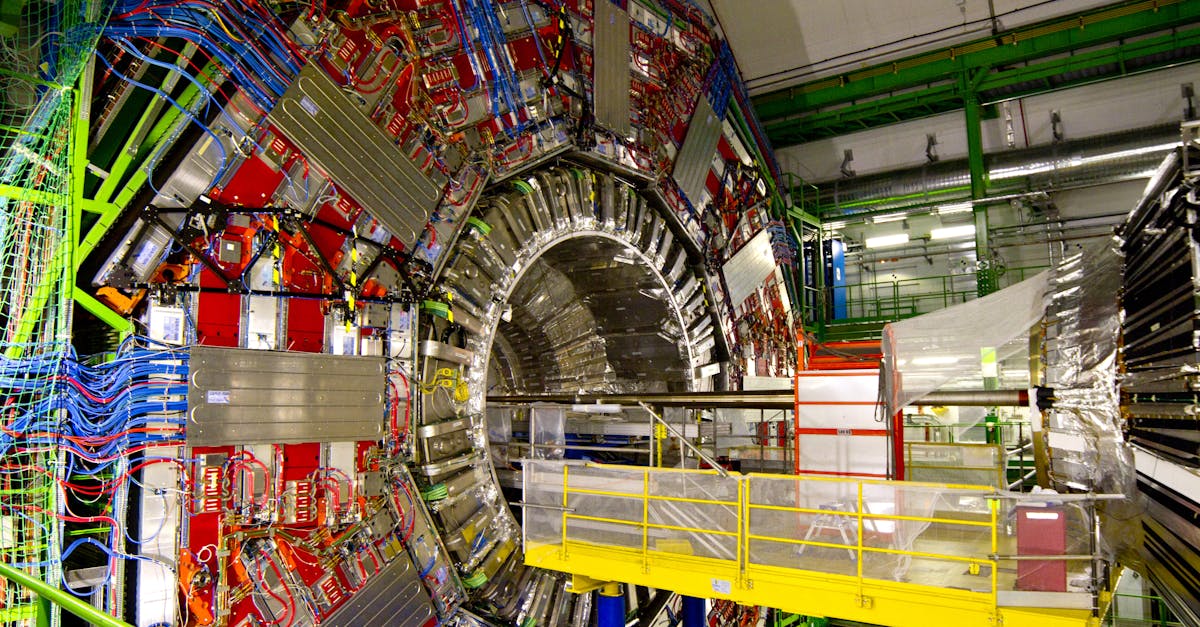
Just after 9 a.m. on February 6, teams sent oxygen ions—atoms stripped bare—into RHIC's twin rings. They collided inside house-sized detectors: STAR and sPHENIX. Gold ions made the main show. Heaviest ever smashed head-on at top energy. That gave the biggest QGP dataset yet.
sPHENIX shone bright. This new detector grabbed over 200 petabytes. That's 200 quadrillion bytes. More than every RHIC run before. It streamed proton collisions non-stop. No filters needed. Old detectors picked events with triggers. sPHENIX recorded everything. That could uncover surprises.
Collision Types and Yields
- Gold-gold smashups: Peak energy. Largest QGP data trove.
- Proton-proton hits: Spin studies. Better gluon maps.
- Low-energy fixed targets: Wrapped beam energy scan.
- Oxygen-oxygen bursts: Final extras.
The plasma swirled. It's the twistiest matter known. Quarks and gluons flowed like liquid. Then cooled. Formed hadrons. Atoms followed. RHIC tracked it all. From trillion-degree soup to protons.
"We'll learn how quarks and gluons generate mass, how their interactions contribute to proton spin, and much more that will revolutionize our understanding of matter—much as the science we've explored at RHIC has," said Anatael Deshpande, science director for the EIC. – Anatael Deshpande
Proton spin got big boosts. 1980s shocks showed quarks give just a bit. RHIC nailed gluons' share. Orbital motion too. Run 25 adds precision. [See how NASA delays moon missions amid tech hurdles.]
What This Means
RHIC shuts down. But data lives on. Years of analysis ahead. It refines QGP models. Shows how universe cooled. Formed stars, galaxies. Us.
The soup was thick. Low drag on fast quarks. Matches hydro models. But surprises lurk. Continuous data might reveal new physics. Proton spin answers help. They tie to everything from nuclei to neutron stars.
EIC takes over. It smashes electrons into ions. Maps quarks inside protons. No Big Bang recreations. Instead, today's matter secrets. Mass origins. Spin sources. RHIC's legacy feeds it.
Other labs build on this. CERN's LHC spots quark wakes. MIT teams confirm. RHIC's gold data complements. Together, they paint early universe clearer.
For science, it's a pivot. No more heavy ions at Brookhaven. Data crunching rules now. Findings will drop steady. Over a decade maybe. Each tweaks our cosmos story.
This Big Bang soup view sharpens. From dense hot mess to structured world. RHIC delivered proof. The final run seals it.
Frequently Asked Questions
What is quark-gluon plasma?
It's a state where quarks and gluons move freely, like a liquid. RHIC collisions make tiny drops of it, mimicking the early universe.
Why was Run 25 RHIC's last?
The lab prepares for the Electron-Ion Collider. It studies matter differently, focusing on quark arrangements inside protons.
How much data did they collect?
Over 200 petabytes from sPHENIX alone. That's more than all previous RHIC data combined, with 40 billion QGP snapshots.
Frequently Asked Questions
What is quark-gluon plasma?
It’s a state where quarks and gluons move freely, like a liquid. RHIC collisions make tiny drops of it, mimicking the early universe.
Why was Run 25 RHIC’s last?
The lab prepares for the Electron-Ion Collider. It studies matter differently, focusing on quark arrangements inside protons.
How much data did they collect?
Over 200 petabytes from sPHENIX alone. That’s more than all previous RHIC data combined, with 40 billion QGP snapshots.