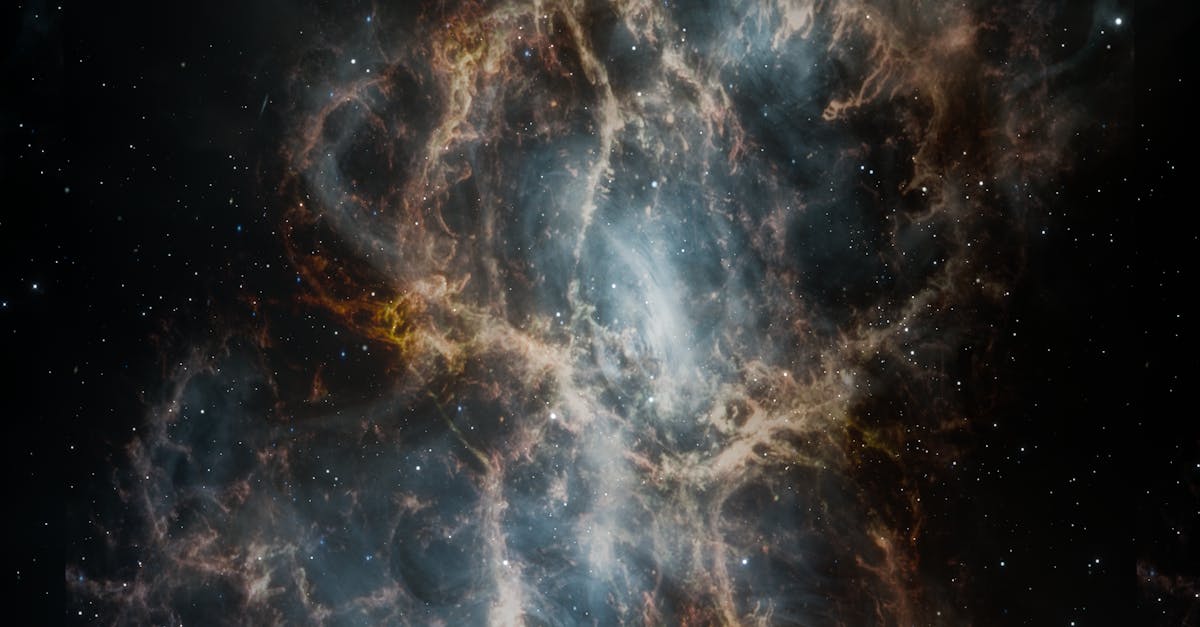
Jason Birch, an astrophotographer from Sandy, Utah, has photographed the Crab Nebula expanding in real time from his backyard. He shared the images this week, showing how the supernova remnant has grown since earlier photos. Birch runs a YouTube channel called SpacebyJace where he documents his work. The Crab Nebula, also known as Messier 1, comes from a star that exploded less than 1,000 years ago. That star was eight to 10 times bigger than our sun.
Background
The Crab Nebula sits about 6,500 light-years away in the Taurus constellation. Chinese astronomers saw the supernova that made it back in 1054. They called it a guest star because it stayed bright for weeks. Today, the nebula is a cloud of gas and dust left from that blast. It keeps spreading out as filaments of material move through space.
Birch got into astrophotography a few years ago. He started with basic gear but built up to tools that let him take long exposures. His setup includes a telescope mounted on a tracking system to follow the stars as Earth turns. He takes many photos over hours or nights, then stacks them on a computer to pull out faint details. This method cuts noise and brings out the nebula's shape.
Hubble Space Telescope images of the Crab Nebula have inspired people for decades. One famous shot from 1999 shows its detailed structure. Birch compared his new photo to that one. He aligned the stars in both images. That let him see how the nebula has changed. Over 26 years, it has grown enough to cover stars that were visible before.
Supernova remnants like this one give clues about star deaths. When a massive star runs out of fuel, its core collapses. Then it bounces back in a huge explosion. The blast shoots out heavy elements like gold and iron. Those spread into space and form new stars and planets over time. The Crab Pulsar sits at the center. It is a fast-spinning neutron star that beams radio waves.
Key Details
Birch took hundreds of five-minute exposures to make his image. He stacked them to match the Hubble photo closely. The nebula expands at 3.3 million miles per hour. That speed adds up to 780 billion miles of growth in 26 years. From Earth, the change looks small but clear when images line up.
How He Did It
Birch set up in his Sandy backyard on clear nights. Sandy sits south of Salt Lake City in a dry area good for stargazing. Light pollution from the city makes it harder, but he uses filters to block city glow. His telescope points at faint objects for hours. Software tracks the sky's motion. After collecting data, he processes it with programs like PixInsight. This sharpens colors and contrasts.
The video on his channel explains each step. He shows the raw frames, stacking process, and final comparison. Viewers see the nebula's wispy edges shift outward. Green and red gases glow from elements like oxygen and sulfur. The center looks brighter where the pulsar energizes the gas.
Birch said the Hubble image hooked him early on.
"The Hubble image has blown my mind since before I got into astrophotography." – Jason Birch
His work proves amateurs can do serious science. Groups like the American Association of Variable Star Observers use backyard data for research. Pro astronomers check these images too.
What This Means
Backyard astrophotography opens space study to more people. Equipment costs have dropped. Cameras and software let hobbyists image objects once only for big telescopes. Birch's photo adds to records of the Crab Nebula. Scientists track its speed to learn about supernova physics. If expansion changes, it could signal shifts inside.
This fits bigger efforts to measure cosmic growth. Telescopes like James Webb find distant supernovas. They help gauge the universe's expansion rate. Some data shows different speeds depending on the method. That puzzle, called the Hubble tension, puzzles experts. Local images like Birch's provide baselines over short times.
Amateurs contribute to citizen science. Projects ask people to image nebulae or hunt asteroids. Data from many sites builds maps of the sky. Birch's channel teaches others how to start. He covers gear choices and processing tips. Viewers from Utah and beyond try it themselves.
The Crab Nebula will keep expanding for thousands of years. Its glow fades slowly as gas spreads. In a few centuries, it might look different again. Birch plans more sessions to track it. He wants to compare to future Hubble shots. Other remnants like Cassiopeia A offer similar chances.
Events like this draw new eyes to the sky. Sandy residents now know a neighbor images deep space. Schools might use his video for lessons. It shows science happens anywhere with patience and tools. The nebula's growth reminds us stars change on scales we barely grasp. Birch keeps sharing to spark that wonder.