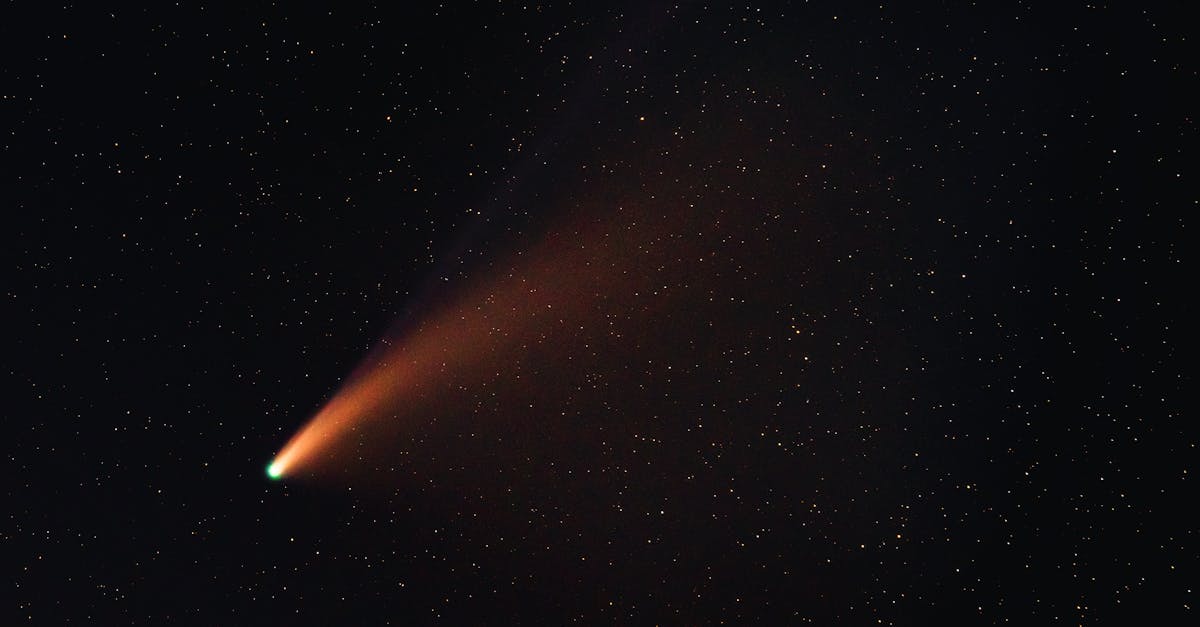
Comet 3I/ATLAS, the third confirmed interstellar object to visit our solar system, underwent a striking change after its closest approach to the Sun on October 30, 2025. NASA's SPHEREx space telescope spotted the comet putting out much more gas in December 2025, including a 20-fold increase in water and carbon monoxide, along with new organic molecules. This shift happened as the comet moved past the solar system's ice line and warmed up enough to release its full load of ices.
Background
3I/ATLAS first showed up on telescopes in early 2025 as a faint dot speeding through our cosmic neighborhood from outside the solar system. Unlike most comets born here, this one came from interstellar space, making it a rare chance to study material from another star system. It was already active when spotted, about 6.4 AU from the Sun in May 2025, ejecting dust grains at speeds from 2 to 22 meters per second. Small particles flew out fast, while larger ones lagged behind.
As it headed inward, the comet passed Mars at 0.194 AU on October 3, 2025. Its path took it to perihelion, the closest point to the Sun, at 1.4 AU on October 30. During this time, it went behind the Sun from Earth's view, hiding from October to November. Before that, telescopes like Hubble, Gemini South, and the Very Large Telescope tracked it. They saw an anti-solar tail grow to 56,000 kilometers by late August and rising levels of nickel and cyanide in the coma, the fuzzy cloud around the nucleus. A wobbling jet of gas and dust pointed to a nucleus spinning every 15.5 hours or so.
Once it emerged on the other side, the comet grew dimmer but stayed watchable in the morning sky through Virgo and Leo. By December, its brightness dipped below magnitude 12, but instruments still picked up big changes.
Key Details
SPHEREx observed 3I/ATLAS from December 8 to 15, 2025, right after perihelion. Compared to August views, the comet looked far more lively. Gas emissions jumped: water vapor, barely there before, surged 20 times stronger. Carbon monoxide output rose by the same amount, while carbon dioxide increased by just a third, shifting the mix of gases.
New signals came from organic C-H molecules, pointing to a fresh release from deeper ice layers. The coma expanded, stretching 1 to 3 arcminutes across. Most gas clouds stayed round, but dust and organics formed pear shapes pointing sunward. This suggests water, CO2, and CO come from a even area around the nucleus, while CN and organics stick to dust grains.
Gas and Dust Patterns
No clear jets or tails showed up in the new data, unlike earlier wobbles. The round shapes for most gases mean symmetric release from the nucleus. Dust, however, trailed toward the Sun, matching how radiation pushes particles. Ejections in July hit 6 kg per second for small dust and 60 kg for large, showing steady output before the big post-perihelion spike.
"The December 2025 observations are consistent with a comet that is now fully active, sublimating even water ice." – Dr. Carey Lisse, Johns Hopkins University Applied Physics Laboratory
The team noted CO2 was already maxed out pre-perihelion, but now everything else joined in. Bulk ice matrix evaporated, letting out the comet's full contents.
What This Means
This awakening marks 3I/ATLAS turning into a textbook solar system comet. Its gas ratios now match common ones here, with water, CO, CO2, and organics in familiar balances. The change ties to crossing the ice line, about where temperatures allow volatiles like water and CO to stay solid. Inside that boundary for 3.5 months by December, heat triggered full sublimation—ices turning straight to gas.
Pre-perihelion, only CO2 and CO drove activity from cold, large icy grains. Now, the whole nucleus contributes, releasing trapped material. This reveals how interstellar comets respond to our Sun's heat, offering clues about their home systems. Dust patterns hint at nucleus makeup: symmetric gas from the core, dust-bound organics from surface layers.
As 3I/ATLAS races outward, it will fade but cross SPHEREx's survey path again in April 2026. More data then could refine models of its size, spin, and ice content. Observations so far show it ejects material like locals, but its path confirms interstellar origin—no bound orbit here. Researchers plan deeper analysis, including full coma mapping and gas evolution.
The event shows how solar heating unlocks comet secrets. For 3I/ATLAS, the Sun's warmth flipped it from quiet traveler to gassy beacon, shedding light on both its past and our system's edges. Tracking continues as it heads to interstellar space, a fleeting guest leaving chemical footprints.