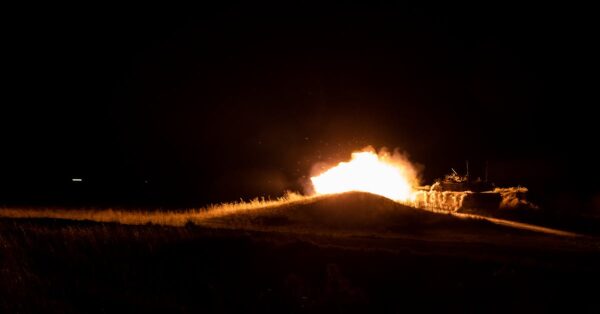
Militants carried out a series of coordinated attacks across Pakistan's southwestern Balochistan province on Saturday, killing 33 people, including 18 civilians and 15 security personnel. Pakistani security forces responded and killed 92 assailants in the fighting.
Background
Balochistan has seen ongoing violence for years. Groups like the Baloch Liberation Army, or BLA, fight for independence from Pakistan's central government in Islamabad. These militants often target security forces, police stations, and government buildings. The province is large and sparsely populated, with key areas like the port city of Gwadar along the Arabian Sea. Poverty and lack of development fuel resentment among some locals.
The attacks came after recent military operations. Just days earlier, security forces raided militant hideouts in the province, killing 41 insurgents. Over the past year, officials say they have killed at least 700 fighters in the area. Rail tracks were damaged earlier Saturday, halting train services from Balochistan to other parts of Pakistan. Mobile phone services faced disruptions in some spots, and traffic was blocked on highways.
Pakistan's military and Interior Minister Mohsin Naqvi pointed to outside support for the militants, naming India as a backer. New Delhi has denied these claims before. The BLA is banned in Pakistan and listed as a terrorist group by the United States. The group has stepped up attacks in recent months, sometimes working with the Pakistani Taliban, known as the Tehrik-e-Taliban Pakistan or TTP.
Key Details
The assaults started almost at the same time across more than a dozen locations in Balochistan. Militants used guns, grenades, and suicide bombings. They hit police stations, a high-security prison, paramilitary bases, banks, and vehicles on highways.
Attacks in Quetta and Nearby Areas
In Quetta, the provincial capital, grenades struck a police vehicle, killing two officers. The government called a hospital emergency to handle the wounded. In Mastung district, dozens of insurgents stormed a prison, freeing over 30 inmates. They took weapons and ammunition from the site.
In Nushki district, militants tried to take over paramilitary headquarters but were pushed back. Grenades hit a government office in Dalbandin district, though security forces chased off the attackers quickly. Posts in Balincha, Tump, and Kharan saw failed assaults.
Coastal and Highway Incidents
Along the coast in Pasni and Gwadar, insurgents stopped buses on highways and tried to take passengers. At least five civilians died there, including three women and three children from one family. Banks were robbed in some places, and dozens of vehicles were set on fire.
The BLA claimed responsibility. They released videos showing female fighters involved, aiming to show women's roles in their group. Provincial spokesman Shahid Rind said most attacks were stopped early. Provincial Chief Minister Sarfraz Bugti said forces were pursuing remaining fighters.
Provincial Health Minister Bakht Muhammad Kakar described the start of the attacks:
The attacks began almost simultaneously across the province. We lost two police officers right away in Quetta from a grenade on their vehicle.
Analysts called it the deadliest day for militants in Balochistan in decades. One expert from the Pakistan Institute for Conflict and Security Studies said no group had lost so many fighters in a single day before.
Security forces reported killing 133 militants over the last 48 hours, with 92 on Saturday alone. Clashes left many injured on both sides.
What This Means
These events show the persistent challenge of insurgency in Balochistan. The scale of the attacks, with hits in so many places at once, points to better planning by the militants. Releasing prisoners and burning vehicles disrupts daily life and government control.
For Pakistan, the high number of assailants killed boosts claims of effective counter-terrorism. But the loss of civilians and security personnel highlights risks to ordinary people. Hospitals on emergency status treated many wounded, straining local resources.
The involvement of female fighters in BLA videos may aim to recruit more or challenge stereotypes. It also raises questions about how insurgents train and organize women.
Broader tensions play a role. Pakistan links Baloch groups and the TTP to bases in Afghanistan, a charge denied by Kabul's Taliban rulers. India-Pakistan rivalry adds fuel, with Islamabad accusing New Delhi of support for separatists.
Over 70 people died in total when counting all sides, based on early reports. This fits a pattern of rising violence in 2026, with other incidents like bombings and raids earlier in the year. Security operations continue, with forces chasing groups in remote areas.
Local leaders stress quick responses foiled worse damage. Train services remain suspended, and highways see checks. The province stays on high alert as forces clear hideouts and guard key sites like Gwadar port, vital for trade under the China-Pakistan Economic Corridor.
Experts watch for retaliation. Militants may strike back after heavy losses. Security teams plan more raids to prevent regrouping. Families mourn losses amid closed roads and damaged buildings. Recovery efforts focus on fixing rails and restoring services.