
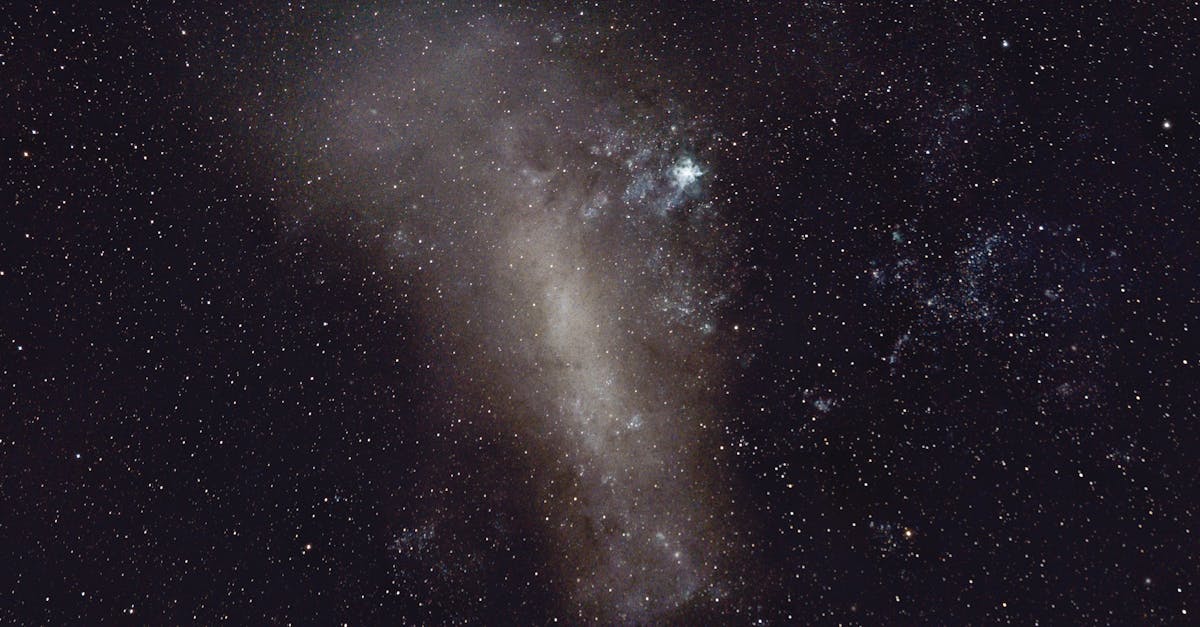
Astronomers have spotted a huge change in WOH G64 star transformation, one of the largest stars known. This giant, located in the Large Magellanic Cloud about 160,000 light years away, shifted from a red supergiant to a yellow hypergiant around 2013 and 2014. The move comes as the star dims and heats up. Experts say it might mean the end is near for this behemoth.
Key Takeaways
- WOH G64 grew over 1,500 times wider than our Sun as a red supergiant.
- It turned yellower and hotter by more than 1,000 degrees Celsius in just a couple years.
- New observations show it's still a red supergiant with a hot companion star.
- The changes could lead to a supernova, but debate continues on the exact path.
Background
WOH G64 sits in the Large Magellanic Cloud. That's a dwarf galaxy next to our Milky Way. This star formed from a massive cloud of gas and dust millions of years ago. Pressure built up until fusion kicked in at its core. It burned hydrogen first, like our Sun does. But WOH G64 is so big. It moved fast through its fuel.
Over time, it swelled into a red supergiant. That's when stars expand after helium burning starts. The outer layers cool to red colors. WOH G64 reached more than 1,500 times the Sun's size. For decades, it stayed in that state. Scientists watched its brightness and spectrum. Data from 1992 onward showed steady behavior. Then things shifted.
In 2011, the star started to dim. By 2013 and 2014, it brightened again but looked different. Telescopes picked up a yellower glow. The temperature rose over 1,000 degrees Celsius. That's a fast change for such a giant. And it faded a lot by 2025. Atmospheric chemistry altered too. These signs grabbed attention. Researchers dug into old records and new observations.
The Large Magellanic Cloud helps here. It's close enough for detailed views. Ground-based telescopes caught the shifts. Interferometers spotted dust clouds nearby. All this paints a picture of a star in turmoil. But not everyone agrees on what's happening. Some see a straight path to explosion. Others point to a companion star's role.
Key Details
Spectral Clues and Recent Observations
New spectra from the Southern African Large Telescope tell a story. Taken from late 2024 into 2025, they show molecular bands from titanium oxide. That's a marker of cool red supergiant atmospheres. Yellow hypergiants run too hot for that. So WOH G64 hasn't fully left its red phase.
Yet emission lines dominate the spectrum. Hydrogen lines like H-alpha glow strong. Forbidden lines from nitrogen and oxygen appear too. These suggest ionized gas nearby. A hot source must be pumping energy in. Scientists now think there's a binary system. The main star, component A, gives the red continuum. Component B, hot and blue, drives the emissions.
Brightness dropped in the 2010s. A fresh dust cloud formed around then. It might have blocked the red supergiant's light more than the hot partner's. Pulsations that once marked it as Mira-like stopped. The atmosphere looks extended. Shallow bands hint at low density spread far out.
Earlier images from the Very Large Telescope in Chile showed an egg-shaped cocoon. Gas and dust wrap the system. That fits with mass ejection. But the titanium oxide persists. It's still red. The hot companion was there all along, maybe hidden before.
And the continuum varies. Line emissions behave differently. Two parts at work. Atomic absorptions deepen over time. All this constrains models. Binary interaction seems likely. Mass transfer or merger could explain the drama.
"This implies that WOH G64 is currently a red supergiant and may never have ceased to be. We are essentially witnessing a 'phoenix' rising from the ashes." – Jacco van Loon, astrophysicist at Keele University
Changes started subtle. Pre-2010 spectra hinted at issues. Heavy mass loss over years built a high luminosity to mass ratio. Now it's peaking. Dust from 2024 confirms recent ejections. The system evolves quick. Observations keep coming.
For context on stellar oddities, check out this story on chemists create silicon aromatic after 50-year hunt. And bacteria engineered to eat cancer tumors from inside out shows how far science pushes boundaries.
What This Means
This WOH G64 star transformation offers a live look at late stellar life. Red supergiants rarely show such shifts. If it's heading to yellow hypergiant status, supernova looms. Those blasts seed galaxies with heavy elements. Iron, gold, all from such ends.
But the binary twist changes things. Interaction might strip the envelope without full evolution. No explosion yet. The hot companion could be a stripped core or merger product. It alters supernova odds. Models must account for pairs now.
Observations help test theories. Single stars evolve predictably. Binaries mess that up. Ejections shape final fates. WOH G64 tests both paths. Its age fits. About 5 million years old. Red supergiants max out there.
Future watches matter. More dimming? Stronger emissions? Dust thickens? Answers lie ahead. Telescopes stay aimed. This rare event informs massive star deaths across the universe. Implications reach far. Galaxies form from these cycles.
Understanding binaries like this one ties into broader research. See Antarctic ice yields clues to universe’s deepest secrets for more cosmic insights.
Frequently Asked Questions
What is WOH G64?
WOH G64 is a red supergiant star in the Large Magellanic Cloud. It's one of the largest known, over 1,500 times the Sun's radius.
Why did it change color?
The star dimmed, heated up, and shifted to yellow around 2013-2014. A companion star and mass loss likely caused it.
Will it explode soon?
Signs point to possible supernova prep, but new data shows it's still red. Binary effects may delay or alter the end.
Frequently Asked Questions
What is WOH G64?
WOH G64 is a red supergiant star in the Large Magellanic Cloud. It’s one of the largest known, over 1,500 times the Sun’s radius.
Why did it change color?
The star dimmed, heated up, and shifted to yellow around 2013-2014. A companion star and mass loss likely caused it.
Will it explode soon?
Signs point to possible supernova prep, but new data shows it’s still red. Binary effects may delay or alter the end.