Stargazers and astronomy enthusiasts are preparing for what promises to be one of the most remarkable years in recent memory for celestial viewing. Throughout 2026, the night sky will deliver a series of rare astronomical events that will not occur again for years or even decades, giving people across the globe opportunities to witness phenomena that few humans ever see.
The year opened with the Quadrantids meteor shower in early January, and the sky will continue to deliver spectacles through December. Among the most anticipated events are a rare planetary parade visible to the naked eye, a total solar eclipse crossing multiple continents, and a long-period comet making what may be its only visit to Earth's inner solar system.
Background
Celestial events capture human imagination because they remind us of our place in the universe. Some astronomical phenomena occur regularly, like monthly full moons or annual meteor showers. Others are genuinely rare. Planetary alignments where multiple planets become visible simultaneously in the night sky happen infrequently enough that astronomers mark them as special occasions.
The year 2026 stands out because several of these rare events are converging. This convergence is what has drawn attention from both professional astronomers and casual observers. The combination of events creates opportunities for people without telescopes or special equipment to witness something extraordinary.
"This year is going to be even more insane. We're talking about four eclipses, a rare planetary parade, a once-in-a-lifetime comet, and a celestial double header that astronomers are calling the event of the century."
Key Details
The Planetary Parade
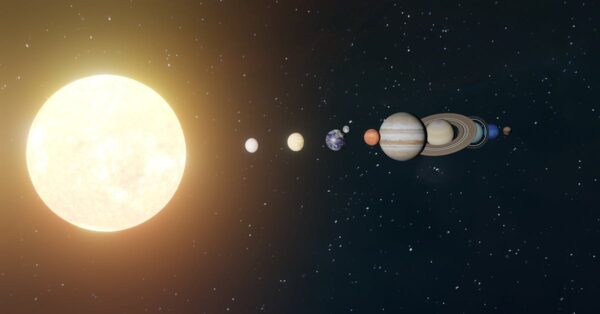
One of the year's most striking events will be a planetary alignment visible to the naked eye. Six planets—Mercury, Venus, Saturn, Neptune, Jupiter, and Uranus—will stretch across the evening sky simultaneously. This arrangement is uncommon enough that it has generated excitement among stargazers.
To see this alignment, observers should venture outside 30 to 45 minutes after sunset and look toward the west. Mercury and Venus will appear low on the horizon, with Venus shining as the brightest object in the sky. Saturn will glow in a steady yellow-gold color higher in the sky, positioned near Neptune in the constellation Pisces. Jupiter will dominate the southern sky, with a waxing gibbous moon hanging nearby. Uranus will require binoculars to spot, positioned between Jupiter and the Pleiades star cluster.
Later in the year, another planetary gathering will occur. Five planets—Mars, Jupiter, Uranus, Saturn, and Neptune—will appear together around 10 p.m. local time. The most striking views will occur on December 25 and 26, when a distinct diagonal line will form above the eastern horizon. Mars, Jupiter, and a waning gibbous moon will rise together and travel across the sky until dawn. Venus will appear in a second alignment just before sunrise.
The Total Solar Eclipse
On August 12, a total solar eclipse will cross parts of the globe. The eclipse will be fully visible from Greenland, Iceland, and Spain. During totality, the sun's corona becomes visible, the sky darkens dramatically, and planets and stars may appear in the daytime sky. The light on the landscape changes in a way that observers describe as unforgettable.
Total solar eclipses are rare events for any specific location on Earth. While they occur somewhere on the planet roughly every 18 months, any given spot on land experiences one only once every few hundred years on average. This makes the August eclipse significant for people in the eclipse path.
The Comet
A long-period comet will reach its closest approach to the sun around April 20, 2026. This comet originates from the outer solar system and is likely making its first and only trip through Earth's inner solar system. Standard predictions suggest it will reach magnitude 7 or 8, visible only with good binoculars.
However, astronomers are excited about a phenomenon called forward scattering. In late April, the comet will pass almost directly between Earth and the sun. This positioning could make the comet brighter and more visible than standard models predict, potentially making it observable without optical aid.
Meteor Showers
Multiple meteor showers will peak throughout the year. The Quadrantids peaked in early January, with rates reaching up to 120 meteors per hour at maximum. The Eta Aquariids will peak in early May, produced by dust particles left behind by Halley's Comet. The Perseids, one of the strongest annual showers, will peak on August 13 under ideal conditions with a new moon.
Planetary Conjunctions
Venus and Jupiter, the two brightest planets in the sky, will appear only a pinky finger apart in June. These two planets will be so close that no telescope will be needed to view them together. This type of conjunction between the brightest planets is special because of their sheer brilliance and is best viewed with the naked eye about 45 minutes after sunset.
What This Means
The concentration of rare events in 2026 offers people multiple opportunities to connect with the night sky. Unlike some astronomical events that require specialized equipment, travel to specific locations, or years of planning, many of these phenomena can be observed from home with nothing more than clear skies and patience.
For casual observers, 2026 represents a chance to witness events that friends and family may never see. For serious amateur astronomers, the year offers exceptional opportunities for photography and detailed observation. Even for professional researchers, the convergence of events provides data and observations that help refine understanding of our solar system.
The year also serves as a reminder that the night sky remains dynamic and full of wonder. In an era when light pollution obscures stars for many people, events like these encourage individuals to seek out dark skies and reconnect with the cosmos that has captivated humans throughout history.